Tuesday, April 30, 2019

Review: Platform: Get Noticed in a Noisy World

Platform: Get Noticed in a Noisy World Platform: Get Noticed in a Noisy World by Michael Hyatt
My rating: 4 of 5 stars

This book is essentially about how to promote yourself in the world of the Internet generally and of social media specifically. If you are not comfortable with self-promotion, I would recommend against reading this book. If you want to learn how to have a bigger voice in the world, this book is for you. In particular, those interested in publishing written works can benefit from Hyatt's sage advice.

Hyatt, a former CEO of a "Christian" bookseller, lays out a comprehensive digital strategy that can be implemented by companies/corporations or individuals. Some of his suggestions require some start-up funding, but one can omit these suggestions if one is on a lower budget.

The chapter on Twitter, in particular, is excellent and perhaps leads the world that publishes in the English language. Again, he sees technologies like Twitter not as an ends to themselves but as a means to advance whatever good message one wants to convey. (At least, I hope it would be a good message.)

The source of his expertise is his time in the publishing industry. As such, he frequently refers to himself as the authority. Like with his views on technology, I read this not as narcissism but as a tool for me to use in my endeavors. Others may dissent, however.

Overall, this book is helpful to learn how to build a personal brand or a platform in today's society using technology. It does an excellent job at it, too.

View all my reviews

Monday, April 29, 2019

Review: Cry, the Beloved Country

Cry, the Beloved Country Cry, the Beloved Country by Alan Paton
My rating: 0 of 5 stars

This book tells the story of apartheid in South Africa. It tells an eye-opening and beautiful tale in succinct and beautiful English. I read this 300-page book in about 24 hours because I enjoyed it so much. I appreciate Paton's short sentences that communicate well through good verbs.

The book is divided into three parts, each with its own focus. Written in 1948, it covers themes such as urban disillusionment, the nature of home and family, racial reconciliation, and one Africa. Abraham Lincoln's story plays a central, though brief, role in the narrative.

One cannot help but wonder what Paton would think of today's South Africa. It is still filled with problems, but the harsh social structures are torn down for the most part.

Paton started his career in the prisons. He went on to help found a liberal political party in South Africa and continued writing about his native land. He spoke in Nelson Mandela's defense during Mandela's trial.

Paton squarely strikes the chord of the tragedy and of the hope in the South African national tale. He opened the eyes of many in 1948. Unfortunately, it took another couple generations for his work to be completed in justice.

View all my reviews

Saturday, April 27, 2019

Review: The Handmaid's Tale

The Handmaid's Tale The Handmaid's Tale by Margaret Atwood
My rating: 4 of 5 stars

This dystopian story tells is exceedingly odd - which Atwood turns into a strength of the book. In it, the entire legislative and executive branch is killed in a mass execution on Presidents' Day. The Constitution is suspended, and the country is transformed into a country called "Gilead." Pollution reigns, and women are oppressed into being valued only for their sexual organs. Sexual pleasure is frowned upon, and some women are made into "handmaids" (with the name based off of Rachel and Leah's handmaids in the book of Genesis). These women are allowed to bear children through sexual intercourse in place of the man's wife, who is barren.

I won't spoil the plot, but it has plenty of twists and turns. I found myself eager to move to the next page and to read the denouement when the time came. Like most in the genre of dystopia, this book contains a vivid account of human nature - how we can grind against each other so as to produce harmful effects. It provides a reminder that a healthy and growing society requires not only leadership (which was taken away in this tale) but also every part doing its part with freedom. Atwood's story causes me to reflect on the nature and benefits of human freedom as well as its limits.

View all my reviews

Wednesday, April 24, 2019

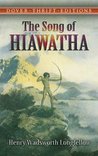
Review: The Song of Hiawatha

The Song of Hiawatha The Song of Hiawatha by Henry Wadsworth Longfellow
My rating: 5 of 5 stars

This book, spanning almost 200 pages, is one large poem. It is divided into chapters and memorializes myths from Native American tribes in mid-western North America. It is entertaining and, like much of Longfellow's poetry, highlights the unique nature of the United States. It portrays America as a land overflowing with natural resources and with a history that is also deep and speckled by strange names like Hiawatha.

No wonder Longfellow received commendation in Westminster Abbey despite not being British. His poetry is patterned with a meter that is obvious to any reader. It does not rhyme but in a chant, lulls the reader into a trance as she/he wonders what is coming next in Hiawatha's adventures.

Themes span the gamut of one's lifespan; birth, adventure, marriage, family, civic service, and death are all covered. In an age where Native Americans could be viewed as racially tinted, Longfellow's approach humanizes the bloodline. One sees Native Americans as a nexus of relationships that, too, long for peace and prosperity.

Unfortunately, history did not always listen to Longfellow. Native American culture is still not much appreciated today and is constrained to reservations. Reading this poem almost 150 years since its first publication, one cannot help but ponder whether Longfellow's idyllic vision meets the reality of modernity. At the very least, however, it gives us something to aspire to.

View all my reviews

Tuesday, April 23, 2019

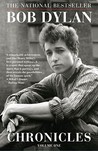
Review: Chronicles, Volume One

Chronicles, Volume One Chronicles, Volume One by Bob Dylan
My rating: 0 of 5 stars

Bob Dylan is perhaps the best popular American songwriter/poet in the past century. Dylan, as he admits in this memoir/autobiography, was not the best student in high school, but he taught himself how to write by imitating the lyrical and musical work of the best folk artists of the day.

Although Dylan is known for his social conscience, in this work, he eschews that he ever aspired to dabble in contemporary politics. He claims - over and over - that he only wanted to be a true folk artist. Although he was popularly known for running away from the public spotlight, he claims that the press forced him to live this life. In so doing, he claims his persona is false - or at the very least, misguided.

Dylan would not be the first artist to claim that popularity hurt his/her life. I'm sure there is a solid nugget of truth in that claim. Nonetheless, Dylan appears to have nurtured this persona in his public portrayal of himself in pursuit of his artistic vision.

Either way, Dylan's passion for songwriting comes through in this work. Most of this book dwells upon how Dylan's unique and brilliant style came about through the deep study of others' poetry and lyrics. Songwriters and poets will find it well worth the time to read, muse, and develop their own styles from Dylan's brilliance.

View all my reviews

Saturday, April 20, 2019

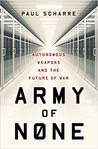
Review: Army of None: Autonomous Weapons and the Future of War

Army of None: Autonomous Weapons and the Future of War Army of None: Autonomous Weapons and the Future of War by Paul Scharre
My rating: 4 of 5 stars

This book, written by a non-technologist with extensive military experience, describes the intersection of artificial intelligence with United States military affairs. It uses terms like “autonomy” and “semi-autonomy” extensively. Autonomous weapons are weapons that can identify their own targets. Semi-autonomous weapons can track pre-identified targets (that is, targets previously identified by humans). Semi-autonomous weapons are currently in use; no autonomous weapons are known to be in use.

The line between these two is currently blurring. This is not due to Department of Defense (DARPA) research, but due to research in artificial intelligence (AI) in the commercial sphere. Computers are becoming “intelligent.” This book explores what that means and whether computers can be considered as “alive.” It does not take this excursion as an academic exercise but rather as an exploration into the future of warfare.

As a technologist, I found myself desiring more optimism in the author. My attitude towards AI is very positive and very inevitable. This author keeps admonishing the reader that humans must remain “in the loop” in military applications so that they can make the ultimate decision whether to go for a kill or not. Again, as a technologist, I see human involvement as more-or-less inevitable. We humans will find a way to make increasingly better use of artificial intelligence because that’s what we’ve done with other technologies throughout thousands of years of human history.

We must – must – continue to work. I’m not scared of what’s ahead. It’s an opportunity for people like me to continue to work and to impact the future. I’m much more scared of our prospects for the future if countries like the United States stop research on military applications and countries like Russia continue. The field of AI will continue to progress because of its promise in other applications. The only real question is to what extent the military will be “in the loop.” I’d rather us focus our energies rather than following a policy of appeasement towards those with a harsher track-record of human rights.

Overall, this book achieves its purpose and communicates its message clearly. Those interested in military affairs or technology should pay attention.


View all my reviews

Thursday, April 18, 2019

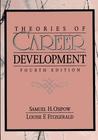
Review: Theories of Career Development

Theories of Career Development Theories of Career Development by Samuel H. Osipow
My rating: 3 of 5 stars

This textbook provides a summary of the field of career development theories in psychological and occupational practice. I read it because I am working with a career-development group in my work, and I wanted a summary of where the field has been in the past.

This book's primary audience is twofold: career counselors and researchers. As such, it summarizes the progression of the field from very trait-oriented (think What Color is Your Parachute?) to a much more complex and intricate story involving gender, socioeconomic factors, and personality.

This summary of the field - current to the 1990s - raises as many questions as it answers. In particular, each theory seems to suffer from similar problems of not enough empirical research to verify or dispute its claims or being too abstract to determine which variable is the true cause.

What else seems sad is that career counselors still use predominantly trait-oriented tests to drive their counseling. While these are somewhat fun (I've taken a few in my life), they do not dive deeply into more complex questions of what a person ought to devote years of her/his life to. How to discern this devotion is not a simple question as it involves, ultimately, the meaning of life and the concept of what a good life consists of.

For career counselors, this book deserves a good reading as it opens up the field in a way that no other book I could find does. Other works and more recent leaders deserve attention as well in planning how to counsel students and workers.

View all my reviews

Sunday, April 14, 2019

Review: Foundation

Foundation Foundation by Isaac Asimov
My rating: 3 of 5 stars

Asimov is obviously quite brilliant. His books took a "quantum leap" forward in the integration of science and literature in the 1950s. His success can be seen in the fact that his books do not seem all that impressive today. Indeed, stories about nuclear power, holograms, and power through knowledge are normal today - thanks in no small part to books like the Foundation.

Like many science-fiction books, this book runs on plot and short on psychology. The fundamental concept of the book is that "psychohistory" predicts phases of history. The universe, at least in this book, is heading to a dark age. Only the scientific knowledge of a small group of people can counteract the "priestly" knowledge based on "religious" control. Clearly, Asimov wants us to embrace science as the foundation for all of existence, in typical 1950s scientific optimism.

And who can blame him? Especially in the 1950s, science has solved so many problems that it seemed continually progression was inevitable. In our post-World-War-Two world, hope sprung forth through the knowledge of a small group of scientists who would reinvent the world.

In life seventy years after Asimov, our postmodern world might demur a bit. Science, though powerful, has not quenched humanity's thirst. Indeed, sometimes the "priests" of science can seem just as fallible as the priests of religion. Nonetheless, it is fun to peer into Asimov's ripe mind, where humanity's thirst for problems is young and the thirst of weakness is fading.

View all my reviews

Saturday, April 13, 2019

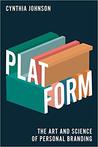
Review: Platform: The Art and Science of Personal Branding

Platform: The Art and Science of Personal Branding Platform: The Art and Science of Personal Branding by Cynthia Johnson
My rating: 4 of 5 stars

Johnson claims expertise in the field of digital marketing. Working in the world of software and playing in the world of writing, I can benefit from learning how to leverage the digital world in better selling myself and my work. This book certainly taught me a few things.

For one, Johnson is great at analyzing how to take social media and accomplish something worthwhile with it. Many of us use social media because it allows us to maintain relationships; few of us push it to the extremes that Johnson has. She views everything in social media according to economic game theory. She wants to rise as others rise. Instead of seeing a ghost behind every bush, she sees networking opportunities behind every fleeting opportunity.

While I don't think that I will ever be as proficient as Johnson is at marketing oneself, I found myself learning from her acumen in detail. She makes good and sound business decisions in a digital world. She has "figured it out" as they say, and she teaches her learning in this book. If you are trying to use a digital platform to share your messages with the world and desire to practice techniques to leverage it more effectively, this short book is for you.

View all my reviews

Thursday, April 11, 2019

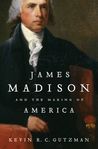
Review: James Madison and the Making of America

James Madison and the Making of America James Madison and the Making of America by Kevin R.C. Gutzman
My rating: 4 of 5 stars

James Madison was a genius. He was the main crafter of the United States Constitution and its main defender/expositor in the Federalist Papers. He saw human and governmental problems more deeply than anyone else in his era. We have him to thank for our world's embrace of democracy and self-government.

Nonetheless, he might not succeed as a politician in the television era. He was small and had a soft voice. He had aristocratic tendencies. He was exceedingly bookish. As such, his biography focuses on the traits of the mind instead of activities. Whereas most of the Founding Fathers had exciting lives, Madison lived as an idealistic and bookish man. His biography then reads more like a ledger of government than like an exciting life.

Gutzman does a decent job of this. Almost all of the tedium is due to Madison's tediousness and not the author's weaknesses. It's fun to swap reasons with Madison. It's fun to reflect how American history has gone back-and-forth on the principles which governed Madison's life. His life was governed by a cerebral approach, and this book makes his logic clear.

View all my reviews

Tuesday, April 9, 2019

Review: You Are A Writer

You Are A Writer You Are A Writer by Jeff Goins
My rating: 0 of 5 stars

This book is a short introduction into the mindset and practices that writers today can succeed with. It places a principle that writers are mainly designed to write. Nonetheless, there are also other marketing, technology, and networking skills that can help writers, like me, to succeed financially in their ventures.

Goins takes the position opposite of Hemingway and stereotype that writers ought to be "very poor and very happy." Instead, Goins takes the position that writers ought to write for themselves, and not for others, but that this act of writing should be able to support themselves financially.

I write because I love exploring the world of ideas. I love interacting with others' ideas in books, and I want to figure out how to be compensated for my interest. I'm not looking for a new career, but Goins' book speaks to me as I think of how to market my interests towards others' good and my own financial self-interest.

View all my reviews

Sunday, April 7, 2019

Review: A Moveable Feast

A Moveable Feast A Moveable Feast by Ernest Hemingway
My rating: 0 of 5 stars

This memoir, published posthumously, covers Hemingway's early days in Paris, right after he decided to leave journalism to become a writer of fiction. He was married, a father, constantly writing, friends with some very intelligent and very successful writers (Gertrude Stein and Scott Fitzgerald), and - to use his words - "very poor and very happy." In this series of short essays, he sheds his skin to expose his heart.

I was struck with the sense that Hemingway found every day an adventure. He is constantly stringing together sentences as run-ons with the connectors of "but" and "and." It's like he is spinning some yarn and can't wait to get to the end. So he rushes and avoids the periods and the commas. He is ready to tell his tale no matter what comes. Such was his sense of determination to become a writer while in Paris.

It is good for this aspiring writer to read of his struggles. He knew not how to make money. He just worked on his craft. This is good advice for anyone starting off in any profession or station in life. Work on the craft; be dedicated to the work; hone your skills; don't be discouraged by rejection. Such was Hemingway's time in Paris, whose lesson of being "very poor and very happy" is the path to success.

View all my reviews

Saturday, April 6, 2019

Review: I, Robot

I, Robot I, Robot by Isaac Asimov
My rating: 0 of 5 stars

This book from the 1950s is one of the most respected works of science fiction in the English language. It tells the story of how "robots" (what we'd probably now call computers and artificial intelligence) end up taking over the world.

Fortunately, Asimov's dystopian tale has ended up not becoming true - in the timespans described by the book, at least. Computers are often described as having personal traits (like it "knows" this or it "learned" that), true. But computers are not embodied like Asimov describes it.

Nonetheless, Asimov's prescience is impressive considering the state of computing and robotics in 1950, when Asimov wrote. Sure, Asimov had access to the cutting-edge literature of the time (and the cutting-edge science as Asimov trained as a biochemist). His story is good food-for-thought for people who try to extend present-day realities into the future in a productive and helpful way.

Many humans use technology as mindless sheep (or lemmings?) today as Asimov predicts. Intelligent people are always in-demand, he tells us. Such, thankfully, is as true today as it was in 1950. Computers may overtake (may have overtaken?) the human brain in contemporary society; still, human abilities to think, critique, create, and extrapolate will allow us to put our intelligence to good use, lest computers run the world and leave humanity merely passive.

View all my reviews

Monday, April 1, 2019

Review: Poems on Slavery.

Poems on Slavery. Poems on Slavery. by Henry Wadsworth Longfellow
My rating: 4 of 5 stars

This collection, published in 1842, vividly describes the predicament of slavery. It makes a case of natural philosophy of why slavery is immoral. Works like Longfellow's began to sway the northern U.S. towards the the emancipation of slaves and the abolition of slavery (through the bloody carnage of the Civil War, Lincoln's Emancipation Proclamation, and the Thirteenth Amendment to the Constitution).

What I find most appealing in the poems in this collection is how Longfellow makes a case that is relatively devoid of the notion of God. He simply dwells, ever-compassionately, upon the human predicament of the slaves. They are not able to reach their dreams; they are surrounded by an environment designed to belittle their self-esteem; they cannot possess a notion of "home;" they are denied identities; they are less free than even "wild" animals.

We live in similar - albeit more muted - bounds in twenty-first-century Western society. Women are still sold into sexual slavery; addiction to drugs still powerfully entraps many; refugees and forced migration still holds too many within its grasp. With different images, Longfellow's profound way with words can be applied to our situation. I'm glad the battle over systemic slavery is over and won. Nonetheless, the path forward is still arduous, and the victory is not complete.

View all my reviews

Review: How To Write a Simple Book Review: It's easier than you think

How To Write a Simple Book Review: It's easier than you think by Allyson R. Abbott My rating: 3 of 5 stars ...