Friday, January 25, 2019

Resources to Explore: Psychology

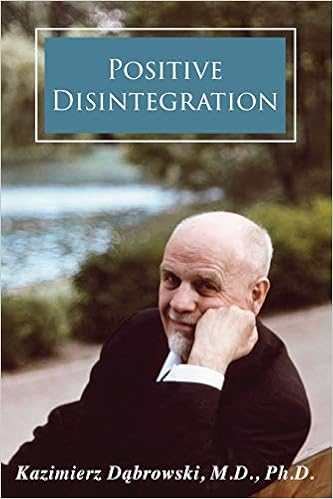
Positive Disintegration by Kazimierz Dabrowski
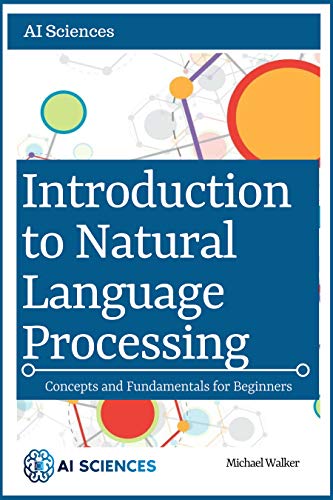
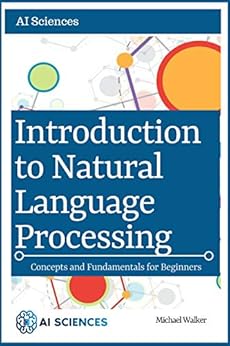
Introduction to Natural Language Processing: Concepts and Fundamentals for Beginners

by Michael Walker
Copyright (c) 2018.

This book sits in a series by the publishing house AI Sciences that traverses topics in the field of Artificial Intelligence to make these subjects more accessible for the masses. I bought this book's Kindle Edition for only $5. Interestingly, this was one of the most expensive items in the series.
I am glad to have taken this short (77-page) book for a perusal. It reviewed some of my prior knowledge about Natural Language Processing (NLP) as well as extended my knowledge in new directions.

NLP studies how computers learn human languages. This process mimics how humans learn language in the brain. I've used some of its contents as I've taught computers how to master the art of classifying information in our scholar database. So I can indeed testify that these concepts are not mere pie-in-the-sky concepts but actually help real software function.

Concepts like Auto-Summarization of texts, Stemming (analyzing words based on their word-stems to acquire meaning), Bag of Words (analyzing texts by word frequency), and Deep Learning algorithms are discussed. As a computer programmer, I find this type of work very interesting to learn and follow.

Saturday, January 19, 2019

The Return of the King

by J.R.R. Tolkien
BBC Audiobook

This book brings about the trilogy's climax - when the ring leaves Frodo's hand into the fire of Mordor with a special literary twist. However, this climax occurs relatively early in the third book. Like most wars (or football games), the victory is apparent much earlier than the end. The tale must continue as all of the intricate details must be tied up. Such is the case with The Lord of the Rings, too.
The four hobbits must return to the Shire. Gandalf must leave on his own. "Normal" life must resume. Tolkien weaves his tale masterfully (as always) onward to the resumption of a "new normal."

Some see in The Lord of the Rings a religiosity and even a theology. I don't see these so much as a story of good versus evil on the backdrop of two world wars. Certainly, theism plays a role in such things, but it is not the central or defining aspect - certainly, less so than with The Chronicles of Narnia where theism is blatantly obvious. Both are good tales first and foremost.

This trilogy reminds us that history ebbs and flows. It's a relatively non-linear process that many try to make linear or to control. Good does ultimately triumph over evil - at least so it seems in the twenty-first century. Peace does come about in the land, as it has in the West since 1945. However, the peace is always tenuous and must be rightly managed lest it give way to evil pestilence. These are good reminders for our day as well as Tolkien's. If one must read theism into such a message in order to maintain its coherence, so be it.

Emotional Intensity in Gifted Students: Helping Kids Cope with Explosive Feelings

by Christine Fonseca
Copyright (c) 2010.

I picked up this book in an attempt to dive deeper into the psychological concept of emotional intensity. I'm an intense guy myself; I live in an intense workplace full of gifted people; my boss is intense; I have an intense wife and daughter at home. I'm trying to learn how to keep all these intense people (including myself) from boiling over. I could not find any management books on the concept of emotional intensity, so educational books served as an adequate substitute.
The first thing Fonseca taught me in this book is that intensity is not the enemy. It is not perfect, but neither is it wrong. It's just a dynamic in the situation. This fact makes me feel better because many times, people can make intensity out as evil. It is not. Rather, it is the means by which many gifted people live. Gifted people see reality more deeply than most; this perception is a great aid in life, but it is not perfect. It must be managed.

The second thing Fonseca taught me was that some people, including myself and some close to me at work and at home, are "dually exceptional." This means that besides being gifted, the person has another dynamic at play like a learning disability or a mental illness (e.g., autism or bipolar). This makes the picture way more complicated. In fact, with these people, rarely do first instincts prove to be reliable because the dynamics are much more complicated. These realities make my life much more entertaining.

I enjoyed this quick read. I read the entire book in about 24 hours. It's good for parents and for teachers - as well as colleagues and people who engage in self-therapy. It makes the whole complicated mess just a little more simple - and more bearable.

Thursday, January 17, 2019

The Age of Innocence

by Edith Wharton
Written in 1920.

This tale spans 20-30 years, two continents, and the hearts of two women and one man. Newland Archer is engaged in pre-World-War-One New York City to May Welland. However, he falls for May's cousin Ellen who is fresh off a separation from her marriage in Europe.
Ellen seems to respond (however subtly) to Newland's flirtations and overtures. Newland seems torn between his two lovers and seems to prefer Ellen over May. May sees the two and responds not with anger but with passivity. She seems to say, "What will be, will be."

After a couple of years of drama, the final chapter approaches the story over twenty years later after the die has been cast. In one fell swoop, Wharton shows her literary marvel in leaving enough unsettled to make the reader unsettled about the outcome. Just enough ambiguity begets questions and speculation.

This story is well worth the read, especially for its visage into early 1900s New York City. The City seems to then be run by a few powerful families, almost in-grown in their society. Rank, scandal, and social rules seems to govern the day, and freedom - at least for those on top - seems fleeting at best. Newland's choice is not only whom to love but whether to rebel. This situation is much like that in any smaller, in-grown community like a church or a small town.

Wednesday, January 16, 2019

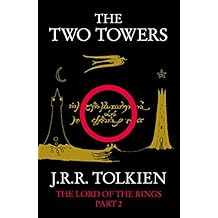
The Two Towers

by J.R.R. Tolkien
BBC Audiobook

This second retelling of Tolkien's masterpiece trilogy of The Lord of the Rings contains more of the same. Like all middle-pieces of trilogies, tensions are unresolved and themes are explored more deeply. Middle-pieces of trilogies are never completely satisfying. The reader does not discover something new (that is left for the first book), and the reader does not come to an end (that is left for the third book). Instead, there is merely more wandering - like the Israelites in the desert awaiting to cross the river Jordan to the Promised Land.
Nonetheless, these parts of life are very important. Alliances must be built; important battles must be fought - and must be even lost - so that bigger battles might be won later down the road. Such is the stuff of life. We cannot be so concerned with the ends - with Frodo's placing the ring in the fire - that he die along the way in the middle of important trials. Mr. Baggins must journey; Mr. Baggins must grow and mature; Mr. Baggins must learn to give his all only to be asked to give more the next day. The wisdom of Gandalf is not arrived at overnight. The journey - and the wisdom, experience, and gratitude therein - takes precedence. The characters and the reader must learn to take joy in the journey, not just the goals, if the goals are to mean anything and everything. Competence in life - competence in the journey - brings assurance and confidence that the goals will be met, that the eye of evil will not triumph, and that the ring will be delivered to its final destination.

These themes Tolkien brilliantly relates in this second-piece of the trilogy. Now, Mordor awaits.

Thursday, January 10, 2019

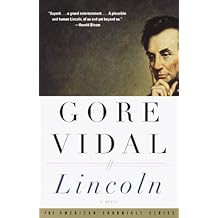
Lincoln: A Novel

by Gore Vidal
Copyright (c) 1984

Lincoln is our nation's savior and helped free an entire race of people from slavery. As such, he has risen to near-saint status. Most books by American historians - and even those takes like that in the British HG Well's A Short History of the World - essentially form a hagiography. Fortunately, our age has Gore Vidal's work of historical fiction, which places Lincoln as a politician and lawyer first. Lincoln, like all truly great politicians, was a realist and a pragmatist. He is not saint to Vidal, but cunning, wise, and shrewd.
Vidal captures Lincoln's spirit by frequently nicknaming him as the "Tycoon." Vidal captures Lincoln's racism (and the racism of others in that day) in portraying Lincoln's suggestion that slaves be sent to colonize another country. His rationale, however, proved true: The American South simply could not live with whites side-by-side with blacks.

American history's great unanswered question - what would have happened if Lincoln would have lived? - is briefly tackled at the end of this novel. The Radical Republicans in Congress would have been kept more at bay by the man who fulfilled their egalitarian dreams. Reconstruction would have gone easier. Perhaps Jim Crow laws would never have come about. Or perhaps this comprises more hagiography.

In truth, whites and blacks could not live side-by-side with each other in the rebellious south in 1865. It took a full century (and another American saint Dr. Martin Luther King) for this balance to be definitively reshaped. The fifty years since Dr. King reminds us that the American South's history may have been reshaped, but it cannot be erased. I suggest that Mr. Lincoln would not have been able to change this dynamic as much as one might hope. His present legacy as the best American President cannot be greater given history's unfolding. Vidal reminds us in his realistic take on Lincoln that Lincoln is a man - a rare man, but a man still.

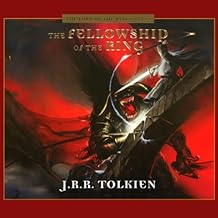
The Fellowship of the Ring

by J.R.R. Tolkien
BBC Audiobook

How to review a narrative that has been a turned into classic tetralogy and a well-funded multimillion-dollar movie trilogy? I've chosen to do so via a trilogy dramatized and produced for radio by the BBC.
In a few hours' time, I let my mind recess into listening to words of fantasy. British accents and the deep tradition of the English language adorned my rides home. An escape was the result - an escape from the lowness of American politics - and also a refocusing on doing good work in this world. This escape is no idle flight; no, it prepares me to approach anew daily life by focusing on doing good, now inspired by the fictional struggle of wizards and hobbits.

Tolkien achieves this for the reader by focusing on a World-War-II-like narrative of good overcoming evil. The humble and good-hearted hobbits named Frodo and Sam leave the comfort of their homeland to undertake a journey with vague ends and no promise of success. They must trod in strange lands and approach difficult problems. They wander, wander, and wander without much assurance that they wander in the right direction. They face real losses. They lose their leader, and they must continue lest the evil eye find the ring and overtake civilization. Nonetheless, the wandering journey of these "everymen" is necessary, just like standing up to Hitler was necessary for the Brits. Just as the the hobbits push forward from their hearts, humanity's heart will triumph over evil.

Nonetheless, the journey is not guaranteed. Evil's threat is real. That is why each generation must take up the struggle anew. There are no guarantees that challenges will be overcome. That is the genius of Tolkien's account. He refocuses our energies into taking up the challenge of doing good (a la Plato's the Good - ta kalon) as they present themselves in the mundanity of our lives - one step at a time in the wilderness.

Thursday, January 3, 2019

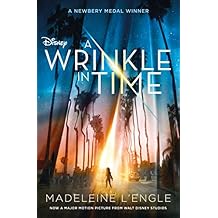
A Wrinkle in Time

by Madeleine L'Engle
Copyright (c) 1962

I have been hearing of this book for a long time. I did not read it as a child nor as a youth. Nonetheless, L'Engle's name circulates in some of the literary circles in which I read (e.g., fans of C.S. Lewis or J.R.R. Tolkein). L'Engle's work portrays a broadly Christian worldview with a tale of the triumph of love. In so doing, she spins Einstein's description of the universe (especially the time-space continuum) into a fascinating narrative that is understandable by youth and young adults.
The main character Meg (a young adolescent) loses her father to an unknown pestilence only to rediscover and save him from another planet in another galaxy. Along the way, she grows up some and discovers what makes humans what they are, to L'Engle - the ability to love. This attribute can be shared with other species in other galaxies. It need not be exclusive to the human story. Nonetheless, love forms an anthropology above all else that saves us from mere repetition and a cold and numb sameness.

Indeed, this book functions on many levels - from a coming-of-age tale to love-conquers-all themes, from fiction inspired-by-science to literary allusions and religious quotations. That's what makes it a classic. It touches the universal human experience tangentially with so much humanity that it reminds us all of what it means to be ourselves on this lonely journey with each other. In an era where political hope seems far away, this message is certainly timely. I'm glad I took some time to expose myself to L'Engle's hard-wrought take on life's journey.

Tuesday, January 1, 2019

Five Favorite Books Read in 2018


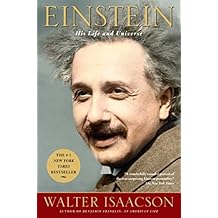
I enjoy Einstein's story a lot as I've read multiple biographies of him. His story spans more than a mere history of science as it tells the tale of World War II, being a refugee, struggles with marriage, and more. This biography is primarily based on recently released personal letters. As such, it provides a more intimate look than prior works. His science (especially the annus mirabilis of 1905 in which several papers revolutionized modern physics for the first time since Isaac Newton) is still covered in detail (a story that of itself is important to any well-read person); however, the intimate portrait of his heart is what's new in this Isaacson best-seller. Well worth the time to read; written in a very engaging style as well. 


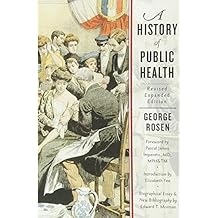
This work spans into my more academic interest in the history of medicine. Rosen writes about how the practice of public health - a very applied science - evolved over time until the 1950s (when the book was originally written). It has been updated for the history since then by another author. This book allows the reader to see how much progress has been made over the last few decades - progress which, at least in American culture, is often taken for granted. Maladies like malaria and yellow fever aren't even on our society's collective radar today, but were constant fears for previous generations. Histories are worth reading so that one doesn't learn to forget past challenges; as such, Rosen's magnum opus is worth its time.

R for Data Science: Import, Tidy, Transform, Visualize and Model Data by Hadley Wickham and Garrett Grolemund
Data science is the hot new cousin of computer science these days. R is one of the primary programming languages that can be used for statistical data analysis. This book can tell you how to get started (for free). Hadley Wickham is the New-Zealand-born publicist of and expert in how to use R to solve common problems. This book is a helpful introduction to all of these topics at once and provides references for how to dive deeper into a topic so as to achieve a fuller mastery. O'Reilly's series into various topics in computer science is legendary (e.g., with Larry Wall's Programming Perl), and this book carries that legacy quite well.


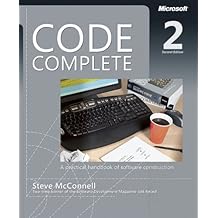
This book covers the progress - in the practical domain - of computer science since about the turn of the century. It is thick, and it is full of references for further reading. It's theory is well-translated into practice. It is conversant with the University of Illinois' famed group on computer languages and extends these concepts into real-world projects. Since it is so comprehensive, some of its material will usually overlap with the reader's prior knowledge, but since it is so comprehensive, it is virtually guaranteed to extend the reader's knowledge in new ways. Well-worth the computer-science practitioner's time.

Eliza Hamilton: The Extraordinary Life and Times of the Wife of Alexander Hamilton by Tilar J. Mazzeo

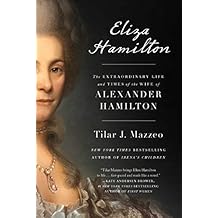
The Broadway play Hamilton has brought this area of history to the fore. One of its most enchanting figures is the person of Eliza Hamilton, Alexander Hamilton's wife. She came from a family with money, served as a steady rock for Alexander Hamilton as he found the nation's bank, and outlived her husband by fifty years. During those fifty years, she helped found the nation's first private orphanage in New York City and raise money for the Washington Monument. Mazzeo tells her story in a manner that disagrees with the play's story of the infamous Hamilton affair; she tells it as a ruse for the Schuyler family's (Eliza's family of origin) financial security. This book reads like a novel but is researched like a history. 

Review: How To Write a Simple Book Review: It's easier than you think

How To Write a Simple Book Review: It's easier than you think by Allyson R. Abbott My rating: 3 of 5 stars ...