Wednesday, May 1, 2019

Review: How To Write a Simple Book Review: It's easier than you think

How To Write a Simple Book Review: It's easier than you think How To Write a Simple Book Review: It's easier than you think by Allyson R. Abbott
My rating: 3 of 5 stars

I picked up this book in an attempt to master the art of writing book reviews further. This is a hobby of mine, and I like to practice it in combination with my "day job" of computer programming.

This "indie" author provides an introduction to book reviewing. It reads conversationally - in a change of pace from the more formal tone of my other scientific readings. The writing is pleasant; however, I found myself sometimes bugged by her consistent use of the word "although" (which is a subordinating conjunction - tying to clauses into one sentence) when a word like "however" (a coordinating conjunction - a part of speech that ties two separate sentences together) would be more appropriate.

It's helpful to learn the business side of book reviews. I would like to have heard more about this angle.

View all my reviews

Tuesday, April 30, 2019

Review: Platform: Get Noticed in a Noisy World

Platform: Get Noticed in a Noisy World Platform: Get Noticed in a Noisy World by Michael Hyatt
My rating: 4 of 5 stars

This book is essentially about how to promote yourself in the world of the Internet generally and of social media specifically. If you are not comfortable with self-promotion, I would recommend against reading this book. If you want to learn how to have a bigger voice in the world, this book is for you. In particular, those interested in publishing written works can benefit from Hyatt's sage advice.

Hyatt, a former CEO of a "Christian" bookseller, lays out a comprehensive digital strategy that can be implemented by companies/corporations or individuals. Some of his suggestions require some start-up funding, but one can omit these suggestions if one is on a lower budget.

The chapter on Twitter, in particular, is excellent and perhaps leads the world that publishes in the English language. Again, he sees technologies like Twitter not as an ends to themselves but as a means to advance whatever good message one wants to convey. (At least, I hope it would be a good message.)

The source of his expertise is his time in the publishing industry. As such, he frequently refers to himself as the authority. Like with his views on technology, I read this not as narcissism but as a tool for me to use in my endeavors. Others may dissent, however.

Overall, this book is helpful to learn how to build a personal brand or a platform in today's society using technology. It does an excellent job at it, too.

View all my reviews

Monday, April 29, 2019

Review: Cry, the Beloved Country

Cry, the Beloved Country Cry, the Beloved Country by Alan Paton
My rating: 0 of 5 stars

This book tells the story of apartheid in South Africa. It tells an eye-opening and beautiful tale in succinct and beautiful English. I read this 300-page book in about 24 hours because I enjoyed it so much. I appreciate Paton's short sentences that communicate well through good verbs.

The book is divided into three parts, each with its own focus. Written in 1948, it covers themes such as urban disillusionment, the nature of home and family, racial reconciliation, and one Africa. Abraham Lincoln's story plays a central, though brief, role in the narrative.

One cannot help but wonder what Paton would think of today's South Africa. It is still filled with problems, but the harsh social structures are torn down for the most part.

Paton started his career in the prisons. He went on to help found a liberal political party in South Africa and continued writing about his native land. He spoke in Nelson Mandela's defense during Mandela's trial.

Paton squarely strikes the chord of the tragedy and of the hope in the South African national tale. He opened the eyes of many in 1948. Unfortunately, it took another couple generations for his work to be completed in justice.

View all my reviews

Saturday, April 27, 2019

Review: The Handmaid's Tale

The Handmaid's Tale The Handmaid's Tale by Margaret Atwood
My rating: 4 of 5 stars

This dystopian story tells is exceedingly odd - which Atwood turns into a strength of the book. In it, the entire legislative and executive branch is killed in a mass execution on Presidents' Day. The Constitution is suspended, and the country is transformed into a country called "Gilead." Pollution reigns, and women are oppressed into being valued only for their sexual organs. Sexual pleasure is frowned upon, and some women are made into "handmaids" (with the name based off of Rachel and Leah's handmaids in the book of Genesis). These women are allowed to bear children through sexual intercourse in place of the man's wife, who is barren.

I won't spoil the plot, but it has plenty of twists and turns. I found myself eager to move to the next page and to read the denouement when the time came. Like most in the genre of dystopia, this book contains a vivid account of human nature - how we can grind against each other so as to produce harmful effects. It provides a reminder that a healthy and growing society requires not only leadership (which was taken away in this tale) but also every part doing its part with freedom. Atwood's story causes me to reflect on the nature and benefits of human freedom as well as its limits.

View all my reviews

Wednesday, April 24, 2019

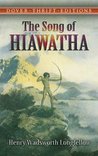
Review: The Song of Hiawatha

The Song of Hiawatha The Song of Hiawatha by Henry Wadsworth Longfellow
My rating: 5 of 5 stars

This book, spanning almost 200 pages, is one large poem. It is divided into chapters and memorializes myths from Native American tribes in mid-western North America. It is entertaining and, like much of Longfellow's poetry, highlights the unique nature of the United States. It portrays America as a land overflowing with natural resources and with a history that is also deep and speckled by strange names like Hiawatha.

No wonder Longfellow received commendation in Westminster Abbey despite not being British. His poetry is patterned with a meter that is obvious to any reader. It does not rhyme but in a chant, lulls the reader into a trance as she/he wonders what is coming next in Hiawatha's adventures.

Themes span the gamut of one's lifespan; birth, adventure, marriage, family, civic service, and death are all covered. In an age where Native Americans could be viewed as racially tinted, Longfellow's approach humanizes the bloodline. One sees Native Americans as a nexus of relationships that, too, long for peace and prosperity.

Unfortunately, history did not always listen to Longfellow. Native American culture is still not much appreciated today and is constrained to reservations. Reading this poem almost 150 years since its first publication, one cannot help but ponder whether Longfellow's idyllic vision meets the reality of modernity. At the very least, however, it gives us something to aspire to.

View all my reviews

Tuesday, April 23, 2019

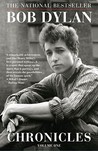
Review: Chronicles, Volume One

Chronicles, Volume One Chronicles, Volume One by Bob Dylan
My rating: 0 of 5 stars

Bob Dylan is perhaps the best popular American songwriter/poet in the past century. Dylan, as he admits in this memoir/autobiography, was not the best student in high school, but he taught himself how to write by imitating the lyrical and musical work of the best folk artists of the day.

Although Dylan is known for his social conscience, in this work, he eschews that he ever aspired to dabble in contemporary politics. He claims - over and over - that he only wanted to be a true folk artist. Although he was popularly known for running away from the public spotlight, he claims that the press forced him to live this life. In so doing, he claims his persona is false - or at the very least, misguided.

Dylan would not be the first artist to claim that popularity hurt his/her life. I'm sure there is a solid nugget of truth in that claim. Nonetheless, Dylan appears to have nurtured this persona in his public portrayal of himself in pursuit of his artistic vision.

Either way, Dylan's passion for songwriting comes through in this work. Most of this book dwells upon how Dylan's unique and brilliant style came about through the deep study of others' poetry and lyrics. Songwriters and poets will find it well worth the time to read, muse, and develop their own styles from Dylan's brilliance.

View all my reviews

Saturday, April 20, 2019

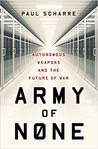
Review: Army of None: Autonomous Weapons and the Future of War

Army of None: Autonomous Weapons and the Future of War Army of None: Autonomous Weapons and the Future of War by Paul Scharre
My rating: 4 of 5 stars

This book, written by a non-technologist with extensive military experience, describes the intersection of artificial intelligence with United States military affairs. It uses terms like “autonomy” and “semi-autonomy” extensively. Autonomous weapons are weapons that can identify their own targets. Semi-autonomous weapons can track pre-identified targets (that is, targets previously identified by humans). Semi-autonomous weapons are currently in use; no autonomous weapons are known to be in use.

The line between these two is currently blurring. This is not due to Department of Defense (DARPA) research, but due to research in artificial intelligence (AI) in the commercial sphere. Computers are becoming “intelligent.” This book explores what that means and whether computers can be considered as “alive.” It does not take this excursion as an academic exercise but rather as an exploration into the future of warfare.

As a technologist, I found myself desiring more optimism in the author. My attitude towards AI is very positive and very inevitable. This author keeps admonishing the reader that humans must remain “in the loop” in military applications so that they can make the ultimate decision whether to go for a kill or not. Again, as a technologist, I see human involvement as more-or-less inevitable. We humans will find a way to make increasingly better use of artificial intelligence because that’s what we’ve done with other technologies throughout thousands of years of human history.

We must – must – continue to work. I’m not scared of what’s ahead. It’s an opportunity for people like me to continue to work and to impact the future. I’m much more scared of our prospects for the future if countries like the United States stop research on military applications and countries like Russia continue. The field of AI will continue to progress because of its promise in other applications. The only real question is to what extent the military will be “in the loop.” I’d rather us focus our energies rather than following a policy of appeasement towards those with a harsher track-record of human rights.

Overall, this book achieves its purpose and communicates its message clearly. Those interested in military affairs or technology should pay attention.


View all my reviews

Thursday, April 18, 2019

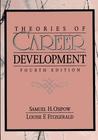
Review: Theories of Career Development

Theories of Career Development Theories of Career Development by Samuel H. Osipow
My rating: 3 of 5 stars

This textbook provides a summary of the field of career development theories in psychological and occupational practice. I read it because I am working with a career-development group in my work, and I wanted a summary of where the field has been in the past.

This book's primary audience is twofold: career counselors and researchers. As such, it summarizes the progression of the field from very trait-oriented (think What Color is Your Parachute?) to a much more complex and intricate story involving gender, socioeconomic factors, and personality.

This summary of the field - current to the 1990s - raises as many questions as it answers. In particular, each theory seems to suffer from similar problems of not enough empirical research to verify or dispute its claims or being too abstract to determine which variable is the true cause.

What else seems sad is that career counselors still use predominantly trait-oriented tests to drive their counseling. While these are somewhat fun (I've taken a few in my life), they do not dive deeply into more complex questions of what a person ought to devote years of her/his life to. How to discern this devotion is not a simple question as it involves, ultimately, the meaning of life and the concept of what a good life consists of.

For career counselors, this book deserves a good reading as it opens up the field in a way that no other book I could find does. Other works and more recent leaders deserve attention as well in planning how to counsel students and workers.

View all my reviews

Sunday, April 14, 2019

Review: Foundation

Foundation Foundation by Isaac Asimov
My rating: 3 of 5 stars

Asimov is obviously quite brilliant. His books took a "quantum leap" forward in the integration of science and literature in the 1950s. His success can be seen in the fact that his books do not seem all that impressive today. Indeed, stories about nuclear power, holograms, and power through knowledge are normal today - thanks in no small part to books like the Foundation.

Like many science-fiction books, this book runs on plot and short on psychology. The fundamental concept of the book is that "psychohistory" predicts phases of history. The universe, at least in this book, is heading to a dark age. Only the scientific knowledge of a small group of people can counteract the "priestly" knowledge based on "religious" control. Clearly, Asimov wants us to embrace science as the foundation for all of existence, in typical 1950s scientific optimism.

And who can blame him? Especially in the 1950s, science has solved so many problems that it seemed continually progression was inevitable. In our post-World-War-Two world, hope sprung forth through the knowledge of a small group of scientists who would reinvent the world.

In life seventy years after Asimov, our postmodern world might demur a bit. Science, though powerful, has not quenched humanity's thirst. Indeed, sometimes the "priests" of science can seem just as fallible as the priests of religion. Nonetheless, it is fun to peer into Asimov's ripe mind, where humanity's thirst for problems is young and the thirst of weakness is fading.

View all my reviews

Saturday, April 13, 2019

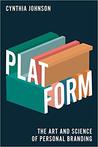
Review: Platform: The Art and Science of Personal Branding

Platform: The Art and Science of Personal Branding Platform: The Art and Science of Personal Branding by Cynthia Johnson
My rating: 4 of 5 stars

Johnson claims expertise in the field of digital marketing. Working in the world of software and playing in the world of writing, I can benefit from learning how to leverage the digital world in better selling myself and my work. This book certainly taught me a few things.

For one, Johnson is great at analyzing how to take social media and accomplish something worthwhile with it. Many of us use social media because it allows us to maintain relationships; few of us push it to the extremes that Johnson has. She views everything in social media according to economic game theory. She wants to rise as others rise. Instead of seeing a ghost behind every bush, she sees networking opportunities behind every fleeting opportunity.

While I don't think that I will ever be as proficient as Johnson is at marketing oneself, I found myself learning from her acumen in detail. She makes good and sound business decisions in a digital world. She has "figured it out" as they say, and she teaches her learning in this book. If you are trying to use a digital platform to share your messages with the world and desire to practice techniques to leverage it more effectively, this short book is for you.

View all my reviews

Thursday, April 11, 2019

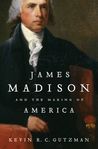
Review: James Madison and the Making of America

James Madison and the Making of America James Madison and the Making of America by Kevin R.C. Gutzman
My rating: 4 of 5 stars

James Madison was a genius. He was the main crafter of the United States Constitution and its main defender/expositor in the Federalist Papers. He saw human and governmental problems more deeply than anyone else in his era. We have him to thank for our world's embrace of democracy and self-government.

Nonetheless, he might not succeed as a politician in the television era. He was small and had a soft voice. He had aristocratic tendencies. He was exceedingly bookish. As such, his biography focuses on the traits of the mind instead of activities. Whereas most of the Founding Fathers had exciting lives, Madison lived as an idealistic and bookish man. His biography then reads more like a ledger of government than like an exciting life.

Gutzman does a decent job of this. Almost all of the tedium is due to Madison's tediousness and not the author's weaknesses. It's fun to swap reasons with Madison. It's fun to reflect how American history has gone back-and-forth on the principles which governed Madison's life. His life was governed by a cerebral approach, and this book makes his logic clear.

View all my reviews

Tuesday, April 9, 2019

Review: You Are A Writer

You Are A Writer You Are A Writer by Jeff Goins
My rating: 0 of 5 stars

This book is a short introduction into the mindset and practices that writers today can succeed with. It places a principle that writers are mainly designed to write. Nonetheless, there are also other marketing, technology, and networking skills that can help writers, like me, to succeed financially in their ventures.

Goins takes the position opposite of Hemingway and stereotype that writers ought to be "very poor and very happy." Instead, Goins takes the position that writers ought to write for themselves, and not for others, but that this act of writing should be able to support themselves financially.

I write because I love exploring the world of ideas. I love interacting with others' ideas in books, and I want to figure out how to be compensated for my interest. I'm not looking for a new career, but Goins' book speaks to me as I think of how to market my interests towards others' good and my own financial self-interest.

View all my reviews

Sunday, April 7, 2019

Review: A Moveable Feast

A Moveable Feast A Moveable Feast by Ernest Hemingway
My rating: 0 of 5 stars

This memoir, published posthumously, covers Hemingway's early days in Paris, right after he decided to leave journalism to become a writer of fiction. He was married, a father, constantly writing, friends with some very intelligent and very successful writers (Gertrude Stein and Scott Fitzgerald), and - to use his words - "very poor and very happy." In this series of short essays, he sheds his skin to expose his heart.

I was struck with the sense that Hemingway found every day an adventure. He is constantly stringing together sentences as run-ons with the connectors of "but" and "and." It's like he is spinning some yarn and can't wait to get to the end. So he rushes and avoids the periods and the commas. He is ready to tell his tale no matter what comes. Such was his sense of determination to become a writer while in Paris.

It is good for this aspiring writer to read of his struggles. He knew not how to make money. He just worked on his craft. This is good advice for anyone starting off in any profession or station in life. Work on the craft; be dedicated to the work; hone your skills; don't be discouraged by rejection. Such was Hemingway's time in Paris, whose lesson of being "very poor and very happy" is the path to success.

View all my reviews

Saturday, April 6, 2019

Review: I, Robot

I, Robot I, Robot by Isaac Asimov
My rating: 0 of 5 stars

This book from the 1950s is one of the most respected works of science fiction in the English language. It tells the story of how "robots" (what we'd probably now call computers and artificial intelligence) end up taking over the world.

Fortunately, Asimov's dystopian tale has ended up not becoming true - in the timespans described by the book, at least. Computers are often described as having personal traits (like it "knows" this or it "learned" that), true. But computers are not embodied like Asimov describes it.

Nonetheless, Asimov's prescience is impressive considering the state of computing and robotics in 1950, when Asimov wrote. Sure, Asimov had access to the cutting-edge literature of the time (and the cutting-edge science as Asimov trained as a biochemist). His story is good food-for-thought for people who try to extend present-day realities into the future in a productive and helpful way.

Many humans use technology as mindless sheep (or lemmings?) today as Asimov predicts. Intelligent people are always in-demand, he tells us. Such, thankfully, is as true today as it was in 1950. Computers may overtake (may have overtaken?) the human brain in contemporary society; still, human abilities to think, critique, create, and extrapolate will allow us to put our intelligence to good use, lest computers run the world and leave humanity merely passive.

View all my reviews

Monday, April 1, 2019

Review: Poems on Slavery.

Poems on Slavery. Poems on Slavery. by Henry Wadsworth Longfellow
My rating: 4 of 5 stars

This collection, published in 1842, vividly describes the predicament of slavery. It makes a case of natural philosophy of why slavery is immoral. Works like Longfellow's began to sway the northern U.S. towards the the emancipation of slaves and the abolition of slavery (through the bloody carnage of the Civil War, Lincoln's Emancipation Proclamation, and the Thirteenth Amendment to the Constitution).

What I find most appealing in the poems in this collection is how Longfellow makes a case that is relatively devoid of the notion of God. He simply dwells, ever-compassionately, upon the human predicament of the slaves. They are not able to reach their dreams; they are surrounded by an environment designed to belittle their self-esteem; they cannot possess a notion of "home;" they are denied identities; they are less free than even "wild" animals.

We live in similar - albeit more muted - bounds in twenty-first-century Western society. Women are still sold into sexual slavery; addiction to drugs still powerfully entraps many; refugees and forced migration still holds too many within its grasp. With different images, Longfellow's profound way with words can be applied to our situation. I'm glad the battle over systemic slavery is over and won. Nonetheless, the path forward is still arduous, and the victory is not complete.

View all my reviews

Saturday, March 30, 2019

Review: The UNIX Programming Environment

The UNIX Programming Environment The UNIX Programming Environment by Brian W. Kernighan
My rating: 0 of 5 stars

This book, copyright 1984, is not one's typical software read. Typical books on software deal with the latest and greatest that's coming down the pike. Instead, this book is a reminder of what is great in the UNIX operating system. It harkens back to the days when assembly coding was common and programming in C was considered more cutting edge.

So why is this worth a programmer's time to read over thirty years later in an era of object-orientation and machine-learning? The answer to this question is not vexing; indeed, it is simple. Great ideas transformed into great inventions deserve great study.

This book's epilog sums up this advice in describing four elements of UNIX's style:

1. "Let the machine do the work."
2. "Let other people do the work. Use programs that already exist as building blocks in your programs..."
3. "Do the job in stages. Build the simplest thing that will be useful, and let your experience with that determine what (if anything) is worth doing next."
4. "Build tools. Write programs that mesh with the existing environment, enhancing it rather than merely adding to it."

View all my reviews

Thursday, March 28, 2019

Review: Favorite Poems

Favorite Poems Favorite Poems by Henry Wadsworth Longfellow
My rating: 4 of 5 stars

I picked up this collection of Longfellow's poetry because I SHOULD know more about one of America's all-time greatest poets. I write poetry; I love dissecting poetry; I SHOULD know more about Longfellow.

While reading, I came to know his clear and entertaining style. I came to appreciate how he can "spin yarn" (tell stories) effectively and efficiently. Whether he is writing in rhyme or in meter, he has the right word coming forth.

This collection contains one poem that is over 30 pages long. Other poems are much shorter, usually 1-2 pages in length. All these works are worth reading. The breadth of topics covered is quite impressive. Longfellow obviously had a supple and fertile mind and life. I can envy that he was able to make a life from poetry.

I am inspired to read more of his classic works. I gave this present work four stars instead of five because of what it omits. This collection contains his famous poem about Paul Revere, but misses some other classics such as The Song of Hiawatha and Evangeline. I am likewise inspired to read his poems on slavery as this is a particular interest of mine.

View all my reviews

Wednesday, March 27, 2019

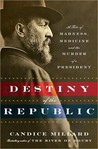
Review: Destiny of the Republic: A Tale of Madness, Medicine and the Murder of a President

Destiny of the Republic: A Tale of Madness, Medicine and the Murder of a President Destiny of the Republic: A Tale of Madness, Medicine and the Murder of a President by Candice Millard
My rating: 4 of 5 stars

This nineteenth-century, post-Civil-War story, like almost all stories, intertwines the lives of several people. Key characters include U.S. President James Garfield, Alexander Graham Bell, Garfield's assassin, Garfield's chief doctor/surgeon, Bell's wife and son, Garfield's wife, and Vice President Chester Arthur.

An assassin - clearly mentally ill, probably with bipolar disorder - shoots Garfield, but not fatally. His American doctors continually probe the wound with their unclean hands. They did so after Lister made and publicized his finding of the value of antisepsis, but before his reforms were widely adopted in America. The physicians were unable to find the bullet as they assumed it lay on the right side of Garfield's body, where the skin wound lay.

Bell invented a primitive metal detector to search for the bullet. He was unable to succeed, however, in Garfield's case because Garfield's doctors forbade him from searching on the left side of his body. Nonetheless, Bell's device was used to find bullets well into the twentieth century (when X-Rays became the gold standard).

The assassin, delusional that the country wanted Garfield dead, ended up trying the insanity defense and failing. He was eventually hung.

Garfield's autopsy showed the true location of the bullet and the real cause of death - bacterial infection (sepsis) of the blood. His body contained pus vacuoles all over, and pustules covered his skin.

Nonetheless, this magnanimous event united the Republic as both North and South expressed deep concern about the president's medical course and mourned the president's death. The newly christened President Arthur becomes the most dynamic character in this story. Previously held in suspicion as being cowardly and deferential towards the political machine, he resolves to lead the country as Garfield would. He reasoned that the people of the United States elected Garfield, not him, and they deserved that their will be borne out. Arthur became an effective one-term President who led meaningful (but not ambitious) reforms of the corrupt "Spoils" system that previously buoyed his career.

View all my reviews

Sunday, March 24, 2019

Review: Machine Learning and AI for Healthcare: Big Data for Improved Health Outcomes

Machine Learning and AI for Healthcare: Big Data for Improved Health Outcomes Machine Learning and AI for Healthcare: Big Data for Improved Health Outcomes by Arjun Panesar
My rating: 4 of 5 stars

After the first chapter of this book, I was ready to put it down and regret the money I spent on it. It seemed to walk over ground that I've already covered as a researcher in medical informatics. Fortunately, I continued, for I came to learn a lot from this author. Although not as succinctly written as academic papers, this book is thoroughly researched and comments on an emerging field - the intersection of healthcare and software. It also comments on this from a British perspective. I am used to reading Americans comment on this field, but comments from a Brit who possesses experience in the field is particularly interesting to me.

The author's experience in this field is particular to Type-2 Diabetes. It is quite obvious that his research tilts towards diabetes. I would like to hear more from this author about work that's being done on other major diseases like HIV/AIDS, malaria, emerging diseases, cystic fibrosis, etc. That is a tall order to ask, I understand, and much work needs to be done for this to be the case. Nonetheless, this is the broad frontier that we now face between medicine and computers.

I'm glad that Panesar added his voice to the effort to leverage computers to fight disease, and I'm glad that I took the time to listen.

View all my reviews

Saturday, March 23, 2019

Review: Team of Rivals: The Political Genius of Abraham Lincoln

Team of Rivals: The Political Genius of Abraham Lincoln Team of Rivals: The Political Genius of Abraham Lincoln by Doris Kearns Goodwin
My rating: 5 of 5 stars

This in-depth look into the lives of Lincoln and his closest advisors meets the hype. It tells the life histories of President Lincoln, his attorney general Bates, his treasury secretary Chase, and his secretary of state Seward. All four had a chance of being nominated as the Republican candidate in Chicago, but Lincoln secured the nod. In turn, he placed the other three in his cabinet.

Although their initial impression of Lincoln was that he was a mere "prairie lawyer," Lincoln soon surpassed their expectations. He earned their respect (even admiration) for his ability to lead the Union during the Civil War with "malice towards none and charity towards all."

Kearns-Goodwin's book has won the praise of Barack Obama, who used this book as a template in forming his Cabinet. Indeed, this book provides an excellent study on leadership, as Obama's support describes. Lincoln took a position of power, effected change, encountered and overcame difficulties, and won the respect of his fellows.

This 1000-page tome tells that tale to a new generation. It deserves to be placed near the front of a long line of Lincoln biographies - near Nicolay and Hay's 10-volume work and Sandburg's 4-volume take.

View all my reviews

Sunday, March 17, 2019

Review: Eat That Frog!: 21 Great Ways to Stop Procrastinating and Get More Done in Less Time

Eat That Frog!: 21 Great Ways to Stop Procrastinating and Get More Done in Less Time Eat That Frog!: 21 Great Ways to Stop Procrastinating and Get More Done in Less Time by Brian Tracy
My rating: 3 of 5 stars

This is a good, solid, well-written book on time management. Whether you are seeking to improve the management of your own time or empathize with others as they attempt to become better stewards of their own time, this book will say it all - in only 21 short chapters!

Its central premise, that time is best managed by taking the hardest project on first, is a reliable and well-tested one. From this premise (put into a metaphor by eating a frog first), the entire book flows.

As with any 100-to-150-page book, what it captures in its brevity, it leaves out in its depth. It does not dwell on these subjects for an extended outlay of pages. If that is what you want - a series of short "devotionals" on time management - this book is for you. If you want to dive into a topic in depth, this book is not for you; perhaps you should pick up something by Peter Drucker.

The third edition (which I read) contains two helpful chapters on the time management of email - of pertinence to our society today. I like Mr. Tracy's contributions to discussion on these topics and welcome his insights into my practice.

View all my reviews

Thursday, March 7, 2019

Review: Design Patterns: Elements of Reusable Object-Oriented Software

Design Patterns: Elements of Reusable Object-Oriented Software Design Patterns: Elements of Reusable Object-Oriented Software by Erich Gamma
My rating: 0 of 5 stars

A classic in the field of computer science, this book describes how object-oriented software can be used to develop meaningful (and reusable) classes. It is written by the so-called "gang of four" affiliated with a working group at the University of Illinois. It has achieved notoriety for its assistance in helping programmers write code more effectively in languages like C++, SmallTalk, and (my current language) PHP. The book has started a large movement in identifying design principles that are inherent in all computer science problems.

The book reads like a catalog of class types. After an initial critique on the state of computer programming, it reads like a textbook and a reference manual to be used. It is academic, analytical, and brilliant. Obviously, the book is only for the serious programmer who aspires to master her/his trade. It is not for the casual programmer or even for the intermediate programmer. It does not hold the reader's metaphorical hand as the book is perused. Instead, it provides data and analysis like a research paper. Of course, in such a style, wisdom is distilled into compact sentences.

I'll be happy to put this book on my bookshelf at work and refer to it when designing software.

View all my reviews

Wednesday, February 27, 2019

Review: Narrative of the Life of Frederick Douglass

Narrative of the Life of Frederick Douglass Narrative of the Life of Frederick Douglass by Frederick Douglass
My rating: 0 of 5 stars

Obviously, this work belongs to history rather than to a shelf of recent releases. Nonetheless, it is clearly written, interesting, and provides much insight into the mind of nineteenth-century Americans in the North, in the South, and in slavery. I found Douglass's writing abundantly lucid and to the point.

It's interesting how American in many ways represented two societies at the time - one free, the other deeply tainted by slavery. The claim Douglass makes in this account 15 years before the Civil War is that slavery does not make humanity moral. It cheapens everything.

In the closing chapters, Douglass describes what freedom in the North was like. He suspected that there would be no rich people in the North because there was no slavery. The only rich people in the South were those with slaves; those without slaves in the South struggled to make ends meet. However, he found that the freedom of the North allowed human freedom to extend into more noble virtues. Life was simply better there.

One wonders if there are parallels to our much-divided politics today. But that would turn this book review into a political tome. So instead, I will merely say that freedom begets freedom, whether in antebellum America or in a globalized village. I think Douglass's account can take us thus far.

View all my reviews

Saturday, February 23, 2019

Review: Mythology: Timeless Tales of Gods and Heroes

Mythology: Timeless Tales of Gods and Heroes Mythology: Timeless Tales of Gods and Heroes by Edith Hamilton
My rating: 0 of 5 stars

This book, widely recognized as a classic - or perhaps the classic - in the field of mythology, provides not just Hamilton's scholarship over a lifetime of classical myths; it provides Hamilton's outlay for how to live the good life. She respects and admires the Greek and Roman cultures whose myths she portrays - so much so that she attempts to convince the reader of their nobility and ability to transform contemporary life.

Mythology in an age of science has its own issues. Nonetheless, we as a culture have certain archetypal stories that we share so as to maintain social cohesion from neighbor-to-neighbor. Phrases like "the girl next door," "listen to the siren-song," or "a Trojan horse" all harken to prior stories in our cultural memory. Some of these go as far back as Greco-Roman mythology. Hamilton brings these allusions to life and remind us of our cultural debt to those who lived thousands of years ago.

It's amazing to think of how much we owe, particularly to the Greeks as intellectual originators and less so to the Romans as cultural progenitors. How did this small island people bring about such enlightenment that students still study their materials in modern America today (e.g., Euclid's Geometry)? Why Greece, of all places? Mythology does not answer all these questions. Instead, it brings us along the way as it tells a story of civilization, of humanity, and of ourselves.

View all my reviews

Sunday, February 10, 2019

Review: Mastering Deep Learning: A Complete Introduction for Beginners and Newbies

Mastering Deep Learning: A Complete Introduction for Beginners and Newbies Mastering Deep Learning: A Complete Introduction for Beginners and Newbies by James Gabriel
My rating: 0 of 5 stars

Deep Learning seeks to mimic how humans learn (i.e., the brain processes of how humans learn in their cerebral cortex) and apply this mimicry to how computer programs are written. Thus, we have terms like a "neural network" which does not refer to a brain (made up of neurons) but to a web of computer cells which "learn" how to produce certain output from input data.

One interesting application of such is detailed in the book. A Generator attempts to produce a fake image, and a Discriminator attempts to figure out which items are fakes. When paired together with machine learning, they can produce a fairly good fake image.

What's somewhat scary about this technology is seen in the newspapers and social networks of today. "Fake news" is not merely news which is contrary to a certain viewpoint; fake news can be a video clip of some famous person saying some phrase that she never uttered! If that doesn't sound like 1984 (or 2016?), I don't know what does.

View all my reviews

Saturday, February 9, 2019

How to Read Literature Like a Professor: A Lively and Entertaining Guide to Reading Between the Lines

by Thomas C Foster
Copyright (c) 2014

I found this book while on a search for a good introduction to literary criticism. This seemed to hit the mark. In it, Foster pursues hard-core analysis of the literary project while spinning a down-to-earth persona (which was obviously well-honed while in a classroom). I was not let down.

One can see why Foster's work is popular among Advanced Placement English teachers in America. He presents himself as one of us (i.e., American and not British), only with a deep erudition of literature. He invites us to see literature symbolically with the emotional weight of the literary tradition on our backs. We begin to see everyday literature as an intertextual conversation amongst the ages, where writers borrow ideas from each other and analyze each other's tomes.

Foster tackles topics like the weather, sex, irony, journeys and quests, and more. As the subtitle tells us, he teaches us to read between the lines as professors do. I hope that reading between the lines will lead to a greater efficacy of writing so that others can read between the lines as well.

Underlying this book is Foster's theory that increasing literary appreciation will lead to greater enjoyment of books. I suspect that he is right on.

Tuesday, February 5, 2019

Vanity Fair: A Novel Without a Hero

by William M. Thackeray
Written 1847-1848

This novel, set in part around the famed Battle of Waterloo in which Napoleon gets his ultimate defeat at the hands of the British, goes through 66 chapters of set up for a tumultuous (and brilliant) final chapter in which every supposition in the prior chapters is set on its head. As a whole, this book is witty, wonderful, and enchanting. It is fit to be a classic - indeed, one of the best books I've ever read.

It is set around the main character, born Becky Sharp. She is a social climber who built her life up from poverty. However, as the subtitle of this book intones, she is an ignoble protagonist. She stirs her hand in every section of the book as a manipulator and as a fraud, yet somehow much good is wrought by her improprieties in the lives of many of her compatriots.

This book provides an interesting look into the lives of England in the 1800s. English classism and the pettiness of nobles are on full display. Nonetheless, there are noble, though still flawed and human, characters such as Amelia. The story traverses from character to character as a masterful plot is wrought.

I especially enjoyed Thackeray's wit - on full display in various comments on the narrative. He writes like a journalist, but not one striving for poor objectivity as is seen in the American practice. He entertains as he tells - and is shown to be a master of the quill.

Friday, January 25, 2019

Resources to Explore: Psychology

Positive Disintegration by Kazimierz Dabrowski

Introduction to Natural Language Processing: Concepts and Fundamentals for Beginners

by Michael Walker
Copyright (c) 2018.

This book sits in a series by the publishing house AI Sciences that traverses topics in the field of Artificial Intelligence to make these subjects more accessible for the masses. I bought this book's Kindle Edition for only $5. Interestingly, this was one of the most expensive items in the series.

I am glad to have taken this short (77-page) book for a perusal. It reviewed some of my prior knowledge about Natural Language Processing (NLP) as well as extended my knowledge in new directions.

NLP studies how computers learn human languages. This process mimics how humans learn language in the brain. I've used some of its contents as I've taught computers how to master the art of classifying information in our scholar database. So I can indeed testify that these concepts are not mere pie-in-the-sky concepts but actually help real software function.

Concepts like Auto-Summarization of texts, Stemming (analyzing words based on their word-stems to acquire meaning), Bag of Words (analyzing texts by word frequency), and Deep Learning algorithms are discussed. As a computer programmer, I find this type of work very interesting to learn and follow.

Saturday, January 19, 2019

The Return of the King

by J.R.R. Tolkien
BBC Audiobook

This book brings about the trilogy's climax - when the ring leaves Frodo's hand into the fire of Mordor with a special literary twist. However, this climax occurs relatively early in the third book. Like most wars (or football games), the victory is apparent much earlier than the end. The tale must continue as all of the intricate details must be tied up. Such is the case with The Lord of the Rings, too.

The four hobbits must return to the Shire. Gandalf must leave on his own. "Normal" life must resume. Tolkien weaves his tale masterfully (as always) onward to the resumption of a "new normal."

Some see in The Lord of the Rings a religiosity and even a theology. I don't see these so much as a story of good versus evil on the backdrop of two world wars. Certainly, theism plays a role in such things, but it is not the central or defining aspect - certainly, less so than with The Chronicles of Narnia where theism is blatantly obvious. Both are good tales first and foremost.

This trilogy reminds us that history ebbs and flows. It's a relatively non-linear process that many try to make linear or to control. Good does ultimately triumph over evil - at least so it seems in the twenty-first century. Peace does come about in the land, as it has in the West since 1945. However, the peace is always tenuous and must be rightly managed lest it give way to evil pestilence. These are good reminders for our day as well as Tolkien's. If one must read theism into such a message in order to maintain its coherence, so be it.

Emotional Intensity in Gifted Students: Helping Kids Cope with Explosive Feelings

by Christine Fonseca
Copyright (c) 2010.

I picked up this book in an attempt to dive deeper into the psychological concept of emotional intensity. I'm an intense guy myself; I live in an intense workplace full of gifted people; my boss is intense; I have an intense wife and daughter at home. I'm trying to learn how to keep all these intense people (including myself) from boiling over. I could not find any management books on the concept of emotional intensity, so educational books served as an adequate substitute.

The first thing Fonseca taught me in this book is that intensity is not the enemy. It is not perfect, but neither is it wrong. It's just a dynamic in the situation. This fact makes me feel better because many times, people can make intensity out as evil. It is not. Rather, it is the means by which many gifted people live. Gifted people see reality more deeply than most; this perception is a great aid in life, but it is not perfect. It must be managed.

The second thing Fonseca taught me was that some people, including myself and some close to me at work and at home, are "dually exceptional." This means that besides being gifted, the person has another dynamic at play like a learning disability or a mental illness (e.g., autism or bipolar). This makes the picture way more complicated. In fact, with these people, rarely do first instincts prove to be reliable because the dynamics are much more complicated. These realities make my life much more entertaining.

I enjoyed this quick read. I read the entire book in about 24 hours. It's good for parents and for teachers - as well as colleagues and people who engage in self-therapy. It makes the whole complicated mess just a little more simple - and more bearable.

Thursday, January 17, 2019

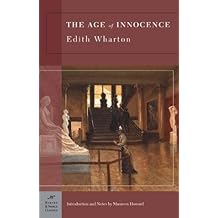
The Age of Innocence

by Edith Wharton
Written in 1920.

This tale spans 20-30 years, two continents, and the hearts of two women and one man. Newland Archer is engaged in pre-World-War-One New York City to May Welland. However, he falls for May's cousin Ellen who is fresh off a separation from her marriage in Europe.

Ellen seems to respond (however subtly) to Newland's flirtations and overtures. Newland seems torn between his two lovers and seems to prefer Ellen over May. May sees the two and responds not with anger but with passivity. She seems to say, "What will be, will be."

After a couple of years of drama, the final chapter approaches the story over twenty years later after the die has been cast. In one fell swoop, Wharton shows her literary marvel in leaving enough unsettled to make the reader unsettled about the outcome. Just enough ambiguity begets questions and speculation.

This story is well worth the read, especially for its visage into early 1900s New York City. The City seems to then be run by a few powerful families, almost in-grown in their society. Rank, scandal, and social rules seems to govern the day, and freedom - at least for those on top - seems fleeting at best. Newland's choice is not only whom to love but whether to rebel. This situation is much like that in any smaller, in-grown community like a church or a small town.

Wednesday, January 16, 2019

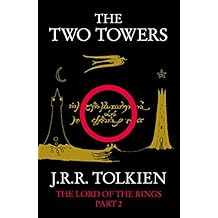
The Two Towers

by J.R.R. Tolkien
BBC Audiobook

This second retelling of Tolkien's masterpiece trilogy of The Lord of the Rings contains more of the same. Like all middle-pieces of trilogies, tensions are unresolved and themes are explored more deeply. Middle-pieces of trilogies are never completely satisfying. The reader does not discover something new (that is left for the first book), and the reader does not come to an end (that is left for the third book). Instead, there is merely more wandering - like the Israelites in the desert awaiting to cross the river Jordan to the Promised Land.

Nonetheless, these parts of life are very important. Alliances must be built; important battles must be fought - and must be even lost - so that bigger battles might be won later down the road. Such is the stuff of life. We cannot be so concerned with the ends - with Frodo's placing the ring in the fire - that he die along the way in the middle of important trials. Mr. Baggins must journey; Mr. Baggins must grow and mature; Mr. Baggins must learn to give his all only to be asked to give more the next day. The wisdom of Gandalf is not arrived at overnight. The journey - and the wisdom, experience, and gratitude therein - takes precedence. The characters and the reader must learn to take joy in the journey, not just the goals, if the goals are to mean anything and everything. Competence in life - competence in the journey - brings assurance and confidence that the goals will be met, that the eye of evil will not triumph, and that the ring will be delivered to its final destination.

These themes Tolkien brilliantly relates in this second-piece of the trilogy. Now, Mordor awaits.

Thursday, January 10, 2019

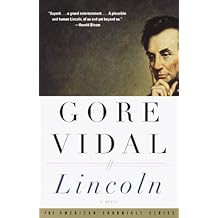
Lincoln: A Novel

by Gore Vidal
Copyright (c) 1984

Lincoln is our nation's savior and helped free an entire race of people from slavery. As such, he has risen to near-saint status. Most books by American historians - and even those takes like that in the British HG Well's A Short History of the World - essentially form a hagiography. Fortunately, our age has Gore Vidal's work of historical fiction, which places Lincoln as a politician and lawyer first. Lincoln, like all truly great politicians, was a realist and a pragmatist. He is not saint to Vidal, but cunning, wise, and shrewd.

Vidal captures Lincoln's spirit by frequently nicknaming him as the "Tycoon." Vidal captures Lincoln's racism (and the racism of others in that day) in portraying Lincoln's suggestion that slaves be sent to colonize another country. His rationale, however, proved true: The American South simply could not live with whites side-by-side with blacks.

American history's great unanswered question - what would have happened if Lincoln would have lived? - is briefly tackled at the end of this novel. The Radical Republicans in Congress would have been kept more at bay by the man who fulfilled their egalitarian dreams. Reconstruction would have gone easier. Perhaps Jim Crow laws would never have come about. Or perhaps this comprises more hagiography.

In truth, whites and blacks could not live side-by-side with each other in the rebellious south in 1865. It took a full century (and another American saint Dr. Martin Luther King) for this balance to be definitively reshaped. The fifty years since Dr. King reminds us that the American South's history may have been reshaped, but it cannot be erased. I suggest that Mr. Lincoln would not have been able to change this dynamic as much as one might hope. His present legacy as the best American President cannot be greater given history's unfolding. Vidal reminds us in his realistic take on Lincoln that Lincoln is a man - a rare man, but a man still.

The Fellowship of the Ring

by J.R.R. Tolkien
BBC Audiobook

How to review a narrative that has been a turned into classic tetralogy and a well-funded multimillion-dollar movie trilogy? I've chosen to do so via a trilogy dramatized and produced for radio by the BBC.

In a few hours' time, I let my mind recess into listening to words of fantasy. British accents and the deep tradition of the English language adorned my rides home. An escape was the result - an escape from the lowness of American politics - and also a refocusing on doing good work in this world. This escape is no idle flight; no, it prepares me to approach anew daily life by focusing on doing good, now inspired by the fictional struggle of wizards and hobbits.

Tolkien achieves this for the reader by focusing on a World-War-II-like narrative of good overcoming evil. The humble and good-hearted hobbits named Frodo and Sam leave the comfort of their homeland to undertake a journey with vague ends and no promise of success. They must trod in strange lands and approach difficult problems. They wander, wander, and wander without much assurance that they wander in the right direction. They face real losses. They lose their leader, and they must continue lest the evil eye find the ring and overtake civilization. Nonetheless, the wandering journey of these "everymen" is necessary, just like standing up to Hitler was necessary for the Brits. Just as the the hobbits push forward from their hearts, humanity's heart will triumph over evil.

Nonetheless, the journey is not guaranteed. Evil's threat is real. That is why each generation must take up the struggle anew. There are no guarantees that challenges will be overcome. That is the genius of Tolkien's account. He refocuses our energies into taking up the challenge of doing good (a la Plato's the Good - ta kalon) as they present themselves in the mundanity of our lives - one step at a time in the wilderness.

Thursday, January 3, 2019

A Wrinkle in Time

by Madeleine L'Engle
Copyright (c) 1962

I have been hearing of this book for a long time. I did not read it as a child nor as a youth. Nonetheless, L'Engle's name circulates in some of the literary circles in which I read (e.g., fans of C.S. Lewis or J.R.R. Tolkein). L'Engle's work portrays a broadly Christian worldview with a tale of the triumph of love. In so doing, she spins Einstein's description of the universe (especially the time-space continuum) into a fascinating narrative that is understandable by youth and young adults.

The main character Meg (a young adolescent) loses her father to an unknown pestilence only to rediscover and save him from another planet in another galaxy. Along the way, she grows up some and discovers what makes humans what they are, to L'Engle - the ability to love. This attribute can be shared with other species in other galaxies. It need not be exclusive to the human story. Nonetheless, love forms an anthropology above all else that saves us from mere repetition and a cold and numb sameness.

Indeed, this book functions on many levels - from a coming-of-age tale to love-conquers-all themes, from fiction inspired-by-science to literary allusions and religious quotations. That's what makes it a classic. It touches the universal human experience tangentially with so much humanity that it reminds us all of what it means to be ourselves on this lonely journey with each other. In an era where political hope seems far away, this message is certainly timely. I'm glad I took some time to expose myself to L'Engle's hard-wrought take on life's journey.

Tuesday, January 1, 2019

Five Favorite Books Read in 2018


I enjoy Einstein's story a lot as I've read multiple biographies of him. His story spans more than a mere history of science as it tells the tale of World War II, being a refugee, struggles with marriage, and more. This biography is primarily based on recently released personal letters. As such, it provides a more intimate look than prior works. His science (especially the annus mirabilis of 1905 in which several papers revolutionized modern physics for the first time since Isaac Newton) is still covered in detail (a story that of itself is important to any well-read person); however, the intimate portrait of his heart is what's new in this Isaacson best-seller. Well worth the time to read; written in a very engaging style as well. 


This work spans into my more academic interest in the history of medicine. Rosen writes about how the practice of public health - a very applied science - evolved over time until the 1950s (when the book was originally written). It has been updated for the history since then by another author. This book allows the reader to see how much progress has been made over the last few decades - progress which, at least in American culture, is often taken for granted. Maladies like malaria and yellow fever aren't even on our society's collective radar today, but were constant fears for previous generations. Histories are worth reading so that one doesn't learn to forget past challenges; as such, Rosen's magnum opus is worth its time.

R for Data Science: Import, Tidy, Transform, Visualize and Model Data by Hadley Wickham and Garrett Grolemund

Data science is the hot new cousin of computer science these days. R is one of the primary programming languages that can be used for statistical data analysis. This book can tell you how to get started (for free). Hadley Wickham is the New-Zealand-born publicist of and expert in how to use R to solve common problems. This book is a helpful introduction to all of these topics at once and provides references for how to dive deeper into a topic so as to achieve a fuller mastery. O'Reilly's series into various topics in computer science is legendary (e.g., with Larry Wall's Programming Perl), and this book carries that legacy quite well.


This book covers the progress - in the practical domain - of computer science since about the turn of the century. It is thick, and it is full of references for further reading. It's theory is well-translated into practice. It is conversant with the University of Illinois' famed group on computer languages and extends these concepts into real-world projects. Since it is so comprehensive, some of its material will usually overlap with the reader's prior knowledge, but since it is so comprehensive, it is virtually guaranteed to extend the reader's knowledge in new ways. Well-worth the computer-science practitioner's time.

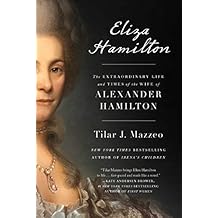
Eliza Hamilton: The Extraordinary Life and Times of the Wife of Alexander Hamilton by Tilar J. Mazzeo

The Broadway play Hamilton has brought this area of history to the fore. One of its most enchanting figures is the person of Eliza Hamilton, Alexander Hamilton's wife. She came from a family with money, served as a steady rock for Alexander Hamilton as he found the nation's bank, and outlived her husband by fifty years. During those fifty years, she helped found the nation's first private orphanage in New York City and raise money for the Washington Monument. Mazzeo tells her story in a manner that disagrees with the play's story of the infamous Hamilton affair; she tells it as a ruse for the Schuyler family's (Eliza's family of origin) financial security. This book reads like a novel but is researched like a history. 

Review: How To Write a Simple Book Review: It's easier than you think

How To Write a Simple Book Review: It's easier than you think by Allyson R. Abbott My rating: 3 of 5 stars ...