Wednesday, December 26, 2018

The Underground Railroad

by Colson Whitehead
Copyright (c) 2016

I picked up this book because it won a Pulitzer for Whitehead and because it had the recommendation of Barack Obama, who reads widely. I was not let down. Its picturesque depiction of slavery and of slavery's effects brought this historical event to life to me. Further, Whitehead vividly shows how the human heart - even those from "uncivilized" Africa - longs universally for freedom. I read it cover-to-cover in less than 36 hours' time.

The story trails a slave named Cora from her plantation in the deep American South (Georgia). She escapes to the "Underground Railroad," which in Whitehead's twist of fantasy, is an actual railroad in tunnels under the ground. Like Gulliver in Gulliver's Travels, Cora visits different places on the railroad as she travels to the north. Each stop has its own culture, its own wars over slavery, and its own evils. She must think - think! - and solve the fundamental problem with each culture in order to continue her escape to true freedom. In the end, Cora realizes that the challenges will never end, even after escape, and healing must come on its own terms.

I realized how freedom and slavery comes in many forms throughout one's life. What at first seems good can turn into another prison if one is not careful. Nonetheless, the human, the everywoman/everyman, must take steps forward so as not to perish along the way. One might lose dear ones along the way, but the journey must continue.

Sunday, December 23, 2018

The Secrets of Consulting: A Guide to Giving and Getting Advice Successfully

by Gerald Weinberg
Copyright (c) 2011

Weinberg is a master of extracting the human personality required to run modern business. He describes one of his art-forms in this introduction to consulting practice. This book does not focus merely on short heuristics on how to consult. It instead goes in-depth into the psyche required to succeed as a consultant.

He defines consulting as the art of influencing people at their request. He then describes a rational framework for this practice and how communication can succeed through humility and the proper management of change. This latter topic (the management of change) is where Weinberg is at his best. He distills his advice in rules or laws that govern the enterprise. Often these laws seem paradoxical or unusual at first. Then he supports these laws with interesting anecdotes that bring the truth to the fore. As such, he prepares the landscape of consulting for those new to the practice. Landmines are able to be anticipated and avoided instead of exploded with pain.

At the very least, Weinberg's voice needs to be heard because of his incredible self-awareness. Instead of approaching the matter as mere science and facts, Weinberg artfully describes the human component in consulting - since it is the art of influencing people, at their request. Anyone who wants to get better at navigating the thorny roads of human feelings and human nature would benefit from reading Weinberg's take.

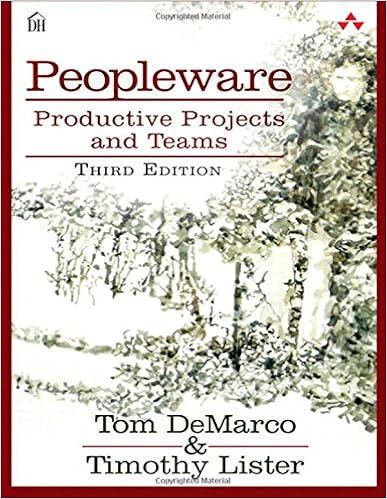
Peopleware: Productive Projects and Teams

by Tom DeMarco and Tim Lister
Copyright (c) 2013

This book is one of the few focused specifically on how to manage projects and teams of knowledge-workers. It teaches the reader how management might retain workers and their essential skills instead of treating them like cattle. It treats the central problem of management is sociology and not technology. Keeping knowledge-workers happy and productive requires humanity and not scorched-earth policies.

The book, in its third edition, is organized into 39 short chapters each with its own focus. As with most management books, its lessons are absorbed in the industry practice. Nonetheless, it is nice to read the thinking and research behind contemporary practice.

Management of people should focus not merely on the goals/objectives of a project but upon the people involved. This is a lesson which is sometimes forgotten by management. The person who works on a project/team is a knowledge worker with feelings, experience, knowledge, and wisdom. One must not only navigate the objectives of a project but also the care of a person. People work best when they are happy and not actively stressed by poor management.

The House of the Seven Gables

by Nathaniel Hawthorne
Written 1851

Hawthorne wrote this book in the warm aura of his masterpiece The Scarlet Letter. This book dwells on the theme of whether a Puritan history - replete with its sad stories like the Salem Witch Trials - will haunt the New England culture forever or whether New England can overcome such sad austerity.

The hope for the future lies in the characters of Phoebe and Hargrove, who end up getting married in this story. They are open to new ideas and open to learning from the past. They seek to experiment in new things like gardening while researching the past. They are Renaissance people for another era. They might not have the best education, but they are interested in learning and growing as people. They alone can free the New England mind (and mind you this book was written in the nineteenth century) from sterility and stagnation based on pride.

It is interesting to read this classic in my current setting in the modern American South. The New England mind of the nineteenth century is a distant and foreign concept to me. A miniature picture of its norms before the Civil War is interesting. While the Southern mind was becoming more entrenched, the New England mind was figuring out new ways to grow and expand its virtue. Puritanical idealism still exists in the American South. Perhaps we need to listen to Hawthorne more to overcome our stagnation in our contemporary setting. Perhaps we need our own Hawthorne to overcome the horrors of slavery and Jim Crow in our history and so to embrace growth.

Monday, December 17, 2018

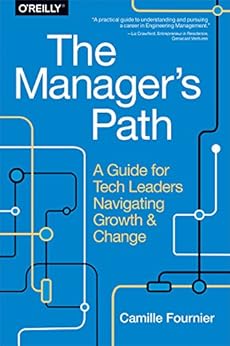
The Manager's Path: A Guide for Tech Leaders Navigating Growth and Change

by Camille Fournier
Copyright (c) 2017

My path to software was not traditional. I always did well at mathematics in school, but I liked many things that weren't technical - journalism, religion, poetry, and medicine all pulled my strings at some time. I have ended up producing software used in medical research. As such, I figured that I needed to study the traditional career path in software/technology to try to meld my diverse skill-set with more traditional steps.

Camille Fournier has provided a book that describes that path. She moves step-by-step through a typical career in technology - from first job to senior management with all the steps and choices in-between. This "bird's eye view" lets someone see the path behind them, around them, and ahead of them. As such, it can be used as a framework to enhance one's skills relevant for the longer term.

The main situation that Camille does not address at length is the non-traditional one. Those who switched from people-doctor to computer-doctor are not addressed. As technology continues to become increasingly ubiquitous around us, careers in technology will probably be wedded with other interests. It would be interesting to hear her thoughts and experiences on this matter.

Saturday, December 15, 2018

The Scarlet Letter

by Nathaniel Hawthorne
Written 1850.

I originally read this book in high school. I reread it now, with two more decades of life experience. I've lived among Christians who revere the Puritan era. I've experienced social shunning. I'm a male living in the #MeToo era where one sin of sexual harassment can lead to career demise.

In all of these situations, however, I side with Hawthorne's sympathies towards those who bear the brunt of social shunning. Or at least, I try to side. If social order must be enforced (and social order in the case of a pregnancy is an extreme but common example), then it must be enforced loosely. That's what prohibition, abortion, and the rest of the culture wars have taught us. It is foolishness to fight human nature.

At the same time, those who are persecuted are often ennobled by their suffering, as Hester Prynne and Pearl were by theirs. The Scarlet A became not a sign of Adultery but of Ability for Hester. Hawthorne holds her up as a model, and I follow her willingly against those (on whatever side of the left/right/center cultural battles) who hold that purity ought to be externally enforced all the time.

It is a tenuous foundation that we sit upon as Americans. We are often blind to the purity-seekers who more-or-less agree with us. Although we are considered a free country, we often bind up our fellow citizens in our quest for purity. Indeed, in so doing, we act like our forebears. Hawthorne reminds us of this well. Puritan New England is not that far away from us today.

Tuesday, December 11, 2018

Eliza Hamilton: The Extraordinary Life and Times of the Wife of Alexander Hamilton

by Tilar J. Mazzeo
Copyright (c) 2018

Like many, I fell in love with the protagonist of Broadway's biggest hit in recent years Hamilton. The true protagonist of that story is not Alexander Hamilton but his wife Eliza Hamilton. Her life as one of our country's founding mothers brings accolades that stack up well alongside her husband's.

She bore seven children. Mindful of her husband's past and her children's present, she helped found the country's first private orphanage. She helped raise money to fund the Washington Monument. She was close personal friends with Martha and George Washington. She was a noble "Roman wife" whose work directly helped found the United States of America. She loved her family and tolerated her enemies.

Eliza was not brilliant. That was Alexander's part. She had heart, though, and loved Alexander and her family deeply.

Most interesting is Mazzeo's take of the Reynolds affair. The way this tale is traditionally told is that Alexander, while Treasury Secretary, had a sexual tryst with a Maria Reynolds with Maria's husband's full knowledge in Eliza's bed. A love note supposedly corroborated the affair. James Reynolds, Maria's husband, supposedly blackmailed Alexander for money with the threat of telling Eliza.

But Eliza never divorced Alexander and defended him with passion for the rest of her life. Why? Mazzeo contends that Alexander falsified the Reynolds pamphlet to cover up for insider trading. She contends that politicians of his time and enemies of Hamilton's political party (including future presidents James Monroe and Thomas Jefferson) knew this and forced the brilliant Alexander out of politics. Mazzeo even outlines her theory in a closing Author's Note within the book.

Well-written and an interesting profile of one of our founding mothers, Eliza Hamilton tells a story not of a saint but of someone's interesting angle on life.

Saturday, December 8, 2018

Let Her Fly: A Father's Journey

by Ziauddin Yousafzai (father of Malala)
Copyright (c) 2018

Malala, Ziauddin's daughter, is an awardee of the Nobel Peace Prize for advocating for girls' education. She paid for this cause by being shot in the face by the Taliban. Her father, living in the midst of a highly patriarchal culture, sought to lead his family in an egalitarian manner while running a school for girls in Pakistan.

Malala's story has been well-told in her best-selling book I Am Malala. Her father's story is told here. It brought tears and warmth to my heart. I appreciate a good father's heart, and this fellow definitely has that. What's more is that he has a tale - filled with near-death, courage, redemption, and love - to support that heart.

What's most interesting in Ziauddin's journey that inspired him to have an egalitarian household. He married a wife who desired equality, but he lived in a culture which systematically denegrates women's place. Nonetheless, Ziauddin came to value education and its ever-present value of equality.

This is a good read for anyone of any culture interested in learning what fatherhood is all about. Ziauddin exhibits that role to the utmost and deserves our respect. It takes courage to live the life he's lived, both in the public sphere and in the private sphere. Credit to journalist Louise Carpenter for sharing this story with the English-speaking world.

Thursday, December 6, 2018

The First-Time Manager

by Loren B. Belker, Jim McCorkmick, and Gary S. Topchik
Copyright (c) 2012
Audiobook

I am not a first-time manager. I am not even a manager. Nonetheless, studying the field of management can give me insight into my work. It can help me work better with the managers around me, and it can help me carry my load as a manage my projects in tandem with the people around me.

This book consists of tips and insights for those transitioning into the role of a manager. It provide indispensable sage advice to avoid common pitfalls. It is field agnostic; that is, it does not focus on only the healthcare industry or only the technology industry. As such, it conveys a generalist message for a general audience.

Some of the advice, then, does not make sense for my position in healthcare or technology. Both of those fields allow team members ("reports") to have a great deal of independence in their work. That autonomy changes some of the dynamics of management. Indeed, sometimes the highest-paid (and most-valued) employee is not the manager. This all speaks to the notion that reports may be the most important contributors and need to know how management functions. Which is why I read this book.

Wednesday, December 5, 2018

Weinberg on Writing: The Fieldstone Method

by Gerald M. Weinberg
Copyright (c) 2011

Gerry Weinberg has a PhD in communications and has written around 60 books on various topics, mostly having to do with computer programming. As a glorified computer programmer and an aspiring writer, this Weinberg book on his methodology for writing seems appealing.

His basic take runs through writing from the heart. He uses the analogy for nineteen of twenty chapters in this book of craftsperson building a wall with "fieldstones" and mortar.

For example, the act of sorting stones into piles is compared with sorting one's ideas into working projects. Many ideas, like many stones, are to be thrown away. Some are meant for placement in one section; some are meant for placement in others. All require careful arrangement.

I like how Weinberg's process is highly non-linear, much like the way I think. I tend to accomplish more through the use of non-linear thinking. (Aren't all good minds essentially non-linear?) I also appreciate the spatial metaphors he uses as I find the linear way I was taught to write in high school to be very confusing.

I write words like I write code - in a blow-off-the-doors, mad rush to dump out my thoughts onto a keyboard. Fitting in a linear process does not really work well for me, whether that be in a manager's linear model (waterfall methodology anyone?) or in an English teacher's ploy for high test grades. I do best when I just make a quick dump and organize as I go. This seems to be how Weinberg teaches us how to communicate as well. That confidence in a method that fits me enables me to write more recklessly and with more moxie than I would otherwise. For that, I am grateful to have read this book.

Monday, December 3, 2018

Jane Eyre

by Charlotte Bronte
First published 1847.

Jane Eyre was and is a classic of the English language. Originally published part-way through the Victorian era, this book tells a story of a woman who lost her parents to an early death and was raised and educated in an orphan's asylum. (It is important to note that this was before the rise of the welfare state in Britain and before public education was recognized as a right.) Her best friend at her school died an early, but not unusual, death.

Jane ended up becoming a governess of a house upon her graduation. The owner of the house falls in love with her, and she with him. They engage to be married, but a surprise greets them on their wedding day. Not willing to compromise the sanctity of their marriage, Jane runs away without her worldly possessions. She is found in a near-death-like state by another family and is taken in by them.

Eventually, the oldest brother of this family asks Jane to marry him, but Jane refuses. He is bound to become a missionary in India, and Jane, though willing to go to India even if it means a sure death, refuses to marry him because they do not love each other. In her words, "cold"-ness and "ambition" drive him, not love.

Circumstances align for Jane soon thereafter. I will not spoil the ending for you, but it is a tale of redemption, my favorite archetype in literature. Perhaps my story as well might be redeemed.

Review: How To Write a Simple Book Review: It's easier than you think

How To Write a Simple Book Review: It's easier than you think by Allyson R. Abbott My rating: 3 of 5 stars ...