Sunday, October 28, 2018

The Confession of St. Patrick

Translated by Charles H. Wright
Fifth century C.E.

Saint Patrick, the patron saint of Ireland, was a British heathen-turned-missionary who spent his life "civilizing" or "Christianizing" the Irish. Though affiliated with the Roman church, Patrick was remarkably free of scholastic learning. As such, he represents a distinct wing of the church's intellectual tradition. While the Western church was becoming other-worldly (and overbearing), Patrick and his Irish converts emphasized the worldly usefulness of faith.

This confession was reportedly spoken and written before Patrick's death. It contains the summarized story of his life, replete with visions, miracles, and all sorts of things offensive to many modern and scientific minds. Even if we can provide more naturalistic descriptions to Patrick's spiritualism (aren't dreams merely a projection of our subconscious?), we must respect his action. To act, not to speak precisely, is the ultimate mark of a human being making the most of life. Patrick certainly acted. He converted an island to his perspective - and to Patrick, God's perspective.

The Irish eventually paid an influential and oversized role in preserving ancient civilizations like that of Greece and Rome. Their monasteries preserved much of the writings that inform us of those traditions. While the continent was wasting away in ignorance, Patrick's spiritual optimism allowed a mini-Renaissance to flourish in Ireland. For that, we all are grateful. Patrick seemed to march to the beat of his own drum. Fortunately, by the end of his life and by the time of this writing, more began to hear its rump-pa-pum-pum.

Saturday, October 27, 2018

Resources to Explore: Software

The Elements of Programming Style by Brian W. Kernighan and P.J. Plauger

Literate Programming by Donald E. Knuth


Code Complete: A Practical Handbook of Software Construction

by Steve McConnell
Copyright (c) 2004

Code Complete is a 850-page tome which might serve as Computer Science guru-author Steve McConnell's magnum opus. His presentation addresses an audience that spans programmers at the beginning level, intermediate level, and advanced level. With its wide-ranging scope, it fills in  any computer scientist's holes of knowledge.

Units are filled with a handful of chapters each and consist of foundations, producing high-quality code, variables, statements, improvements, systemic issues, and craftsmanship. McConnell aims and succeeds at addressing core issues of how software is actually constructed.

I appreciate how much he addresses the team aspect of computer science. For me, this has been lacking in my education. I've worked hard at developing computer programming as a mathematical exercise. McConnell seems to conceptualize the practice more as a sports team, with individuals at varying degrees of core competencies and varying types of skills. As such, he puts forth ideas as computer code as communication in a forceful (again, 850 pages, 35 chapters) approach that I have not read or seen before.

The book is well-researched with frequent citations of studies, books, and papers. It attempts to bring its recommendations with hard facts, not simply sage advice. Further, it provides bibliographies at the end of every chapter with recommendations for further reading. I find that computer scientists are traditionally weak when it comes to reading the literature, and this type of book-list is hard to find. As one who learns best by close, quiet reading, I appreciate the well-commented references.

Thursday, October 25, 2018

Companion to the Quran

by William Montgomery Watt
Copyright (c) 1967, 1994.

It's interesting to become a voyeur into other religions. I see how much of Islam is quite similar to Christian fundamentalism - subjugation to a text, promises or threats of an afterlife, and a general lack of humanism. Perhaps this belies my Christian theological orientation more. I don't really like Christian fundamentalism, nor do I like the Koran much.

I respect Muslims, and I mean them no harm. I just disagree with them that this is the meaning of life. I prefer the Christian story of grace and redemption. I wish to understand Muslims as they are my neighbor, whom I am commanded to love. That is why I read this Companion to the Koran. The scientist in me wants to understand the world around me; the religious side of me wants to learn how to love and respect Muslims more; the seeker in me wishes to understand what this book, so revered, has to contribute to a common human instinct to seek after God.

I leave my reading of this guide grateful that Islam has been in geographic retreat since 1666. Perhaps I should feel the same way about Christianity if I only read one commentary on the Bible instead of hundreds of books of theology. The Bible must come alive to be understood. That's why I like reading the history of religious activities alongside my Bible. The Koran must be the same way. One must first be oriented to learn deeply about the religion. I lack that deep learning - that life habituation - to understand this great book. In my ignorance, I find little compelling here, but I am open to learning more.

Wednesday, October 24, 2018

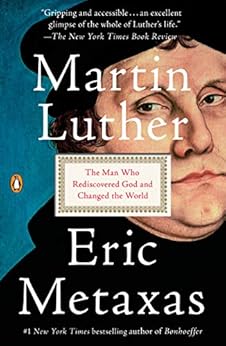
Martin Luther: The Man who Rediscovered God and Changed the World

by Eric Metaxas
Copyright (c) 2017.
Audiobook

Martin Luther's life is controversial any way you cut it. Fundamentalists (with whom Metaxas is sympathetic) like to claim Luther as one of their own because of his insistence on Scriptural primacy. (They like to call it Scriptural authority, but such concepts were not present within Luther's writings.)

Liberals like to claim him because he broke free from institutional chains to usher in the freedom which founded to modern world. Unfortunately, liberals have to grapple with the later Luther who was a grouchy anti-Semite. (His earlier writings actually leaned pro-Jew.)

Twentieth-century Nazis claimed Luther because of this anti-Semitism. Hitler used Luther in the name of a German nationalism to communicate lies of Aryan supremacy.

In truth, Luther is none of these. Martin Luther is a late-medieval monk who rebelled against Roman authority. This book tells his story well. His rebellion led to the founding of Western freedom. As Metaxas chronicles, his 95 Theses directly brought about the modern world. Where other Christian reformers - such as John Huss - failed, Luther succeeded, due in no small part to the technological advancement of Gutenberg's printing press. Protestantism's success laid a foundation for the American Revolution, which laid a foundation for the spread of democracy around the world. All from nailing a document to a wall for scholarly debate.

Unfortunately, Luther's (and Protestantism's) legacy is still mixed. The church universal is split to pieces because of Luther's inability to agree with other Reformers' views on the Lord's Supper at Augsburg. Luther believed that Christ was present bodily in the communion elements while others viewed it as a spiritual or even allegorical presence. No united front against the Roman church came about in Luther's life, and such continues to this day.

Luther is one of those towering people in history that everyone should know a little something about. This book, though thick, can enlighten readers about this controversial yet impactful humble monk.

Resources to Explore: Software


How to Solve It: Modern Heuristics by Zbigniew Michalewicz and David B. Fogel


Writing Secure Code by Michael Howard and David LeBlanc


Lessons Learned in Software Testing by Cem Kaner, James Boach, and Bret Pettichord

The Art of Software Testing by Glenford J. Myers


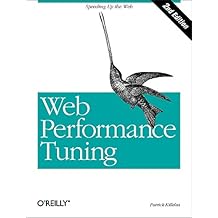
Web Performance Tuning by Patrick Killelea

Software Cost Estimation with Cocomo II by Barry W. Boehm et al.


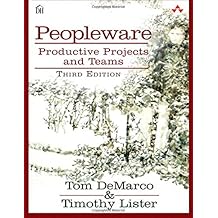
Peopleware: Productive Projects and Teams by Tom DeMarco and Timothy Lister

The Art of UNIX Programming by Eric S. Raymond

Tuesday, October 16, 2018

American Psychosis: How the Federal Government Destroyed the Mental Illness Treatment System

by E. Fuller Torrey, M.D.
Copyright (c) 2014.

This book tells the story of the American mental health system, starting with JFK's "reforms" and ending with the Affordable Care Act. JFK, whose sister suffered from mental retardation and a failed partial lobotomy, assuaged his family's "guilt" by reforming the system to close the state-run mental hospital system. This step federalized the system and took away state responsibility for these actions. In its place, no one - especially a partisan, semi-dysfunctional Congress - takes full responsibility for those struggling with serious mental issues.

In particular, it points out the problems our country has faced with serious mental illness (e.g., schizophrenia and bipolar disorder). For these, deinstitutionalization does not pose a permanent solution as they require inpatient watching, sometimes for the rest of the patient's life.

Dr. Torrey overlooks the positive steps JFK's system took towards those with easier-to-tackle mental issues (e.g., Post-Traumatic Stress Disorder and Major Depression). He also fails to fully acknowledge the problems with the prior system of state-run hospitals. Living herded together like cattle is not really a functioning system to begin with. Getting rid of a dysfunctional system for another dysfunctional system is a relatively even-sum game. The remaining question is what steps ought one take towards assuaging these problems.

Dr. Torrey ends with a chapter of policy analysis and proposals which are frankly the best part of this book. He frames these in ten summarized points which will surely tantalize the policy wonks who live among him in Washington, D.C. One can hope that the true knowledge in this book will speak to our Congress and action can be taken for the most difficult psychiatric cases, for whom very few people know about or care about. These patients cannot lobby for themselves, but we can act for them.

Resources to Explore: Visualizations


Wednesday, October 10, 2018

Mastering Gephi Network Visualization: Produce advanced network graphs in Gephi and gain valuable insights into your network datasets

by Ken Cherven
Copyright (c) 2015.

I fooled around with Gephi at work some months ago. It's one of the leading options that handles Social Network Analysis, a field that is taking off due to seemingly ubiquitous datasets due to academic publishing and social media. This book teaches you the basics of what Gephi has to offer vis-a-vis this field.

I found most interesting the idea of a temporally-based social network - i.e., one that grows over time. This is the root of DNA (Dynamic Network Analysis). Using this data, one can show how a graph changes over time.

The main dataset I use is comprised of academic scholars at my institution and partnering institutions. They collaborate together (or at least are commanded to do so), resulting in academic papers. This data is being used to monitor the fecundity of the minds in academic partnership. My data? Well, there wasn't much collaboration going on, so the entire academic partnership is overblown, unfortunately. It's time to be more deliberate about activities and co-authoring papers, I suppose.

Gephi is a powerful tool and can provide insights to its users. A book like this can teach someone the basics in a way that is not immediately obvious by the user interface. If you're into social network graphs or just charts in general, this provides an interesting aid to telling the story of your data.

Galileo, Courtier: The Practice of Science in the Culture of Absolutism

by Mario Biagioli
Copyright (c) 1993.

This work, now considered the definitive treatment on the Galileo saga where he was silenced for arguing for the Copernican view that the earth revolved around the sun and not the other way around, argues that the setting of Galileo's story has never been well-considered. He was a courtier. He lived under the patronage of various rulers of his day and had to produce great wonders for them.

As such, his story was not one of speaking scientific truth to power, as it is often told, but a courtier trying to make a living in a new environment. He expanded beyond his original identity as a mathematician into a new natural philosopher. Since the university system was dominated by Aristotelian philosophers, his legitimacy was found at court - and at court alone. A prince and eventually the pope served as his audience and could freely support any ideas that they deemed appropriate. The professionals/courtiers were not yet bound by accreditation by groups like the Royal Society in Britain. Their "accreditation" came from the court and the patronage system alone.

Galileo's well-told story, then, needs to be contextually situated in this light. He was trying to persuade princes to support him financially and was shut down when his patron decided to overthrow Galileo as the patron's "favorite." (This overthrow of the sovereign's favorite can also be seen historically in Queen Elizabeth's shunning of Sir Walter Raleigh after Raleigh married a court-maid.) Galileo, of course, belonged to the prior age more than the coming age. While science can speak truth to power today, its institutional identity and strong professional organizations lay as its supporting source of integrity. Without these modern innovations, scientists, academicians, and intellectuals are mere fodder for rulers.


Monday, October 1, 2018

Bonhoeffer: Pastor, Martyr, Prophet, Spy

by Eric Metaxas
Copyright (c) 2011.
Audiobook.

This book has been on my to-read list for a while, and it feels good to finally cross it off. Bonhoeffer's story is worth sharing. Educated as a theologian, raised as a scientist under a German psychiatrist, Dietrich Bonhoeffer lived his life in rejection of the German state-church which was coopted under Adolf Hitler. He is a reminder of what living a life in the Resistance is like.

Along the way, Bonhoeffer pastored a few churches, founded a seminary, and wrote a few books to fill in the gaps of Lutheran theology. Often, Lutherans deemphasize works in favor of faith, a la their founder Martin Luther. As such, Lutheran theology sometimes needs to be prodded that a pietistic life can be a good thing. Bonhoeffer found this out and wrote about Life Together and The Cost of Discipleship by distinguishing between cheap grace and real grace, which is lived through a life of suffering.

Bonhoeffer eschews his Christian pacifism and conspired to kill Hitler in the middle of World War II. He was later hanged shortly before the Allies freed Germany and opened the concentration camps. As such, he lived his message and died resigned to the will of God. His story - a hero story that Metaxas likes to share - is worth a read.

Haiti, After the Earthquake

by Paul Farmer
Copyright (c) 2012.
Audiobook version.

In January 2010, Haiti experienced a seven-point earthquake that laid waste to an already-struggling infrastructure. The world, for a few moments, paused and sighed a collective, compassionate sigh towards one of the oldest republics in the Western Hemisphere.

Paul Farmer, known for starting Partners in Health and for being deputy ambassador to Haiti from the UN under Bill Clinton, composed this book about his experiences soon after the earthquake. Paul has spent over 30 years serving this island-nation, and he knows it like few outsiders do. He shares these memories in an attempt to provide a chronological diary for the sufferings of this people and to publicize the weight of their journey.

At the conclusion of the book lies several stories from individual Haitians. It is nice to hear their patriotism intermixed with their empathetic sufferings of their fellow citizens. Clinton always raved about how resilient the Haitian people are. They will bounce back. This story - these journeys - tell exactly how this bounce-back will occur. For those interested in being more globally minded, this book is worth a read.

Review: How To Write a Simple Book Review: It's easier than you think

How To Write a Simple Book Review: It's easier than you think by Allyson R. Abbott My rating: 3 of 5 stars ...