Monday, August 27, 2018

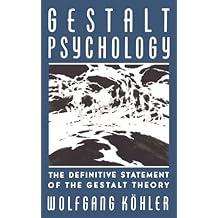
Gestalt Psychology: The Definitive Statement of the Gestalt Theory

by Wolfgang Koehler
Copyright (c) 1947.


I picked this book to read because I was interested in how the average computer user approaches a computer screen. I've been convinced for some time now (maybe 15-20 years) that people approach computers not through user manuals nor even through tips on how to use it. They approach the computer through their intuition.

Intuition has a lot to do with the psychological concept of Gestalt, so I've learned. The Gestalt of an experience is the essential insight that the outside world offers. For example, the Gestalt of a drop-down computer widget is to look for something to come down from it. This is the "insight" (the purpose of thought according to Koehler) that the experience offers. So one clicks and sees the result.

Koehler describes how we approach the world through our prior categories of understanding - behavior, introspection, recall, etc. - until we finally gain some insight into our experience. It's only when we meet this insight, this understanding, this Gestalt, that we reach our home and live more as we are supposed to live. We are happy, content, even joyful.

I share Koehler's despising of behaviorism. It provides for such a shallow psychology. I was surprised when he said that introspection was not the end. Instead, it is a step along our journey to insight.

This book is hard to understand - exactly as one might expect from a German psychologist. Nonetheless, it began to make sense at the very end, at the chapter for Insight/Gestalt. I'm grateful for a more in-depth understanding of this word and thus of myself.

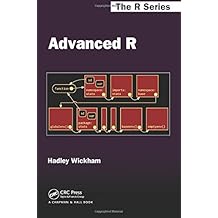
Advanced R

by Hadley Wickham
http://adv-r.had.co.nz/

Hadley brings an in-depth analysis of the R statistical language in this book and opens up more questions as it enlightens the reader to possibilities with R.

This book is only for the nerds of the nerds as it explores the R programming language, a language used mainly by non-programmers for statistical analysis. As such, the readership for this book is presumably small. Nonetheless, it fills a need as it supplies R users with a textbook for advanced programming.

R is a functional programming language, which means that functions can be passed as arguments in calls to other functions. Hadley shows us, as only a true scientist can, how to take full advantage of this property. He also explores R's underpinnings (R written to implement R functions); R's foundation in another programming language, C; and R's extensions into C++, a third programming language. All this in the name of making R more usable and have better performance.


Resources to Explore: Software

Ry's Git Tutorial by Ryan Hodson


Tuesday, August 21, 2018

The Epidemic: A Global History of AIDS

by Joanathan Engel
Copyright (c) 2006.

 Although this book is a little over a decade old, most of its history is still relevant to the equation when one speaks of HIV/AIDS. The history of the male-homosexual community combined with the history of IV-drug-user community combined with Asian/African transmissions is still locked in many of the same patterns that were present in 2006. Engel does a strong job of telling their stories and in so doing, telling the story of one of the worst plagues in recent history.

The saddest thing about AIDS is that it preys upon some of our outcast peoples: IV drug users, male homosexuals, prostitutes, sub-Saharan Africa, South Asia. Perhaps it is our fault for casting them out, but these populations doo not need additional stigma to be heaped upon them. But stigma, HIV/AIDS brought on.

This book highlights the simple fact that transmission of HIV is simple: One only needs to be part of an at-risk group, like someone who shares needles, engages in sex with many sexual partners, or engages in anal sex. Preventing the transmission of HIV is as simple as stopping those practices or using techniques to sanitize them.

It is sad that Reagan did not slow or stamp out the disease in the earliest years as this book well attests. HIV eradication is a long way away, but at least HAART treatment covers much of the infected, at least in the Western world. Africa and Asia still suffer from not being able to afford HAART treatment.

If you care about the outcast and those not in the center of society, this book is for you.

Resources to Explore: Software


Monday, August 20, 2018

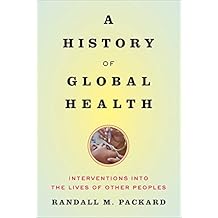
A History of Global Health: Interventions into the Lives of Other People

bg Randall M. Packard
Copyright (c) 2016.

I chose this book to read because I wanted a tutorial to the field of global health, and I find that histories are interesting tutorials to subjects. The author, unknown to me, is a Johns Hopkins professor of medical history and is known for writing a work on the history of malaria.

The book meets my already-high expectations. Written well, it chronicles early attempts to control disease in "foreign" habitats. It talks about how the "white man" acted with self-interest in Panama with yellow fever and with malaria. It holds no punches about the shortcomings of global health efforts, and as a good history, it shares how more primitive early efforts evolved into greater attempts down the road.

The author's most-obvious contribution to this conversation is his insistence to examine the economic and social underpinnings of health. Long-term contributions will work along these lines. Too often, Westerners' contributions were/are focused on attacking one disease (like smallpox or malaria) and are blind to the needs of greater societal structures of healthcare. Of course, disease interventions are also necessary and can have quite an impact (e.g., with smallpox's eradication). But eradication efforts must be coupled with long-term contributions to culture and education.

Women's roles cannot be underestimated. In most of the non-Western world, women can live in an underclass without as much freedom or knowledge. Women who learn, to be frank, do not become prostitutes and can control their environment to prevent the spread of disease.

Overall, I would recommend this book for global-health reading. I plan to soon compare it with a history of public health - interventions into the lives of our own people.

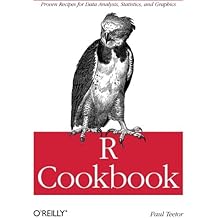
R Cookbook: Proven Recipes for Data Analysis, Statistics, and Graphics

by Paul Teetor
Copyright 2011.

I picked up this book with the intention of learning intermediate R. I was past the novice stage of learning the language, but I was still short of learning Advanced R. This book gave me the confidence to read R code more quickly and to understand more nuance in this (fun) language.

This book is written by a quant (Wall Street data analyst) who has Masters degrees in both statistics and computer science. I find his statistics section interesting and most helpful. His visualization section is dated as it should use ggplot instead of R's native plotting techniques.

He analyzes several helpful methods; figuring out those methods constitutes the learning part of the book. The short script (this is a computer cookbook after all) were helpful to extend my knowledge and agility with the language.

The statistics section consists of a plethora of helpful analytical techniques to get what you want out of R. The information in this section is unique to me and as such new/useful. It tells me what techniques to use for certain types of data (e.g., normal vs. non-normal). Short of a statistics textbook, that's all you can ask for from a computer script cookbook.

So this book served its purpose well. I would not classify it as essential R reading, however. There are other texts which are more important. Some of the scripts are obvious, but this book provided good reading while I was eating lunch for a couple of weeks.

Friday, August 10, 2018

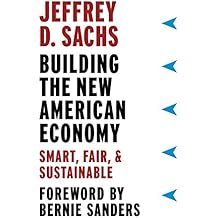
Building the New American Economy: Smart, Fair, and Sustainable

by Jeffrey D. Sachs
Audiobook
(c) 2016.

I voted for Hillary Clinton twice in 2016. She beat Bernie Sanders in the first race, only to lose to Donald Trump in the second in a close race. Bernie Sanders relied on Sachs' economics advice. Therefore, I find it important to educate myself on the issues in this democracy and to read this book to illuminate my ignorant mind.

Sachs lays out a powerful and persuasive case for engaging in new challenges for America. In particular, he suggests that we move investment away from the militarism that has consumed our deficit-laden budgets since 1980 and towards domestic challenges.

Some will surely label Sachs' plan as socialist. But if you get past that word and delve into the arguments and data, Sachs has very good points. In fact, the happiest and most prosperous countries today (and America is not among them) are socialist in their orientation. Surely, we in America can learn from these situations instead of engaging in a red fear.

My main concern with Sachs' plan is that it moves too quickly too soon. History teaches that too much reform can be the enemy of true reform as much as obstructionism. We must pick a few hard challenges to engage in and focus. Unfortunately, hyperpartisanship in Washington is crippling our national leadership. The easy part is identifying challenges. Even finding solutions is somewhat easy these days. The challenge is working together with the other, whether that other be a protester or an evangelical, someone who watches Fox News or someone who watches MSNBC. We must learn to work together again. I'm left wanting to hear Sachs' ideas on that.

Tuesday, August 7, 2018

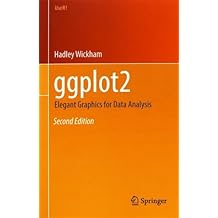
ggplot2: Elegant Graphics for Data Analysis

by Hadley Wickham
(c) 2016.

This is another book that applies to one of my nascent passions: Statistical programming with R. This book brings forth the central visualization package in ggplot by its author Hadley Wickham. Like most of Hadley's works, the book is meticulously researched and extremely clear. It is a winner in  accomplishing its goals of introducing visualization in R. It even contains a short section on modeling in R.


For those who don't know what R is, it is a statistical programming language. It helps statisticians (or programmers like myself) do statistical work efficiently. Hadley is a strong exponent in the community, and this work tells advanced users of R how to do visualization work. It is not meant as an introduction to R (i.e., R for beginners), but as a follow-up book, much like two of Hadley's other works, Advanced R or R Packages.

Hadley uses Leland Wilkinson's The Grammar of Graphics to dissect how graphing works. Data is abstracted from an aesthetic mapping which controls how the data is communicated (e.g., through bar graphs, line graphs, pie graphs). Then these are combined together to give the programmer more control of the graph.

By existing within a programming language (R), this method gives the programmer/user much more control over the final product. Thus, high quality visualizations become a reality with ggplot. Unfortunately, one has to spend time reading a book in order to learn how to do that, but that is a small price to pay for enhanced quality and control. This book is worth the time.

Resources to Explore: Software


Sunday, August 5, 2018

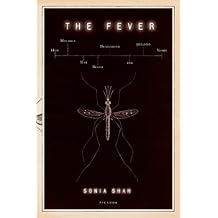
The Fever: How Malaria has Ruled Humankind for 500,000 Years

by Sonia Shah
(c) 2010.

Especially during the later Bush years, I heard a lot about mosquito nets to prevent malaria. It was a simple intervention that provided real action. Now, I'm told many (actually, most) of those mosquito nets aren't used to protect those that are sleeping. They are used as fish nets or on only adults, not on more vulnerable children.

This little-known fact and more comprises the main storyline in Fever. Written by an Indian-American with personal ties to the disease, this book chronicles the history of an infection which still makes up one of the greatest public/global health challenges humankind has ever faced.

Topics range from pharmacology to scientific rivalries and from DDT to World War II. Extremely deep research and balance are the main means.

Convinced by the end of the book, I share Shah's concern that little prohibits an antibiotic-resistant version of malaria from rekindling among mosquitoes in Europe or America. If we cannot solve problems on other continents, how will we be able to solve this disease if it comes to our own shores, much like other mosquito-enabled diseases like West Nile Virus? If we cannot limit its scope in Asia and Africa, can we say that we've defeated this disease? Or has it defeated us?

Friday, August 3, 2018

Resouces to Explore


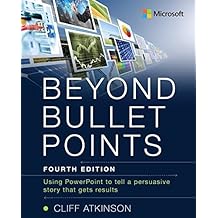
Beyond Bullet Points: Using PowerPoint to Tell a Persuasive Story that Gets Results.

Beyond Bullet Points: Using PowerPoint to Tell a Persuasive Story that Gets Results.
by Cliff Atkinson
(c) 2018.

This book, sponsored by Microsoft, uses contemporary theories about communication to advocate that people stop using PowerPoint as a crutch and instead use it as a tool to tell a story. It accomplishes that task very effectively.

Most people use PowerPoint to delineate a series of statements to be used in a presentation. I've sat through many lectures in my education where lecturers merely regurgitate a series of messages already outlines on a slide deck. One can be pardoned for wondering whether one can get by with just reading print-outs of their slides in personal time.

Atkinson seeks to revise this problem, and he got Microsoft to publish his response. He makes PowerPoint a tool in the hands of a speaker to drive home central points in a talk. Warning against overcrowding slides, he advocates a simpler approach. He wants people to put only main points on slides because more material tends to confuse one's working memory, which can only handle between three and nine items at a time, depending on whose research you use.

He uses the motif of a story/narrative to center the presenter's ideas around in order to change/inform the audience's minds better. As such, he moves the center of a presentation from the presenter's delineations to the audience's cognitive processes. This shift makes communication much more effective.

A simple and easy read with good research to back it up and with stories to entertain.

If You Can Keep It: The Forgotten Promise of American Liberty

by Eric Metaxas
(c) 2016.

The title of this book is stolen from Benjamin Franklin when asked if we were founding a monarchy or a republic. With his classic quick wit, he responded, "A republic... if you can keep it."

This book, by a radio talk show host, comprises a series of lecture-type chapters that admonishes patriotism instead of carelessness towards America. It contains many anecdotes which are interesting, such as that of Nathan Hale's, "I regret only that I have but one life to give for my country."

It lacks a central argument beyond the obvious patriotism. Maybe I haven't experienced that anti-patriotism of the Northeast, but Metaxas' pleadings seem somewhat obvious. He doesn't really raise the conversation that highly beyond the obvious observation that we are killing each other with partisanship. Instead of exploring that topic in depth, he just sermonizes about one's country in a very superficial manner.

I like Metaxas' other works on Bonhoeffer and Luther. Despite the entertaining stories, this work lacks a fundamental central idea. I'd take a pass on this one.

Review: How To Write a Simple Book Review: It's easier than you think

How To Write a Simple Book Review: It's easier than you think by Allyson R. Abbott My rating: 3 of 5 stars ...