Wednesday, May 1, 2019

Review: How To Write a Simple Book Review: It's easier than you think

How To Write a Simple Book Review: It's easier than you think How To Write a Simple Book Review: It's easier than you think by Allyson R. Abbott
My rating: 3 of 5 stars

I picked up this book in an attempt to master the art of writing book reviews further. This is a hobby of mine, and I like to practice it in combination with my "day job" of computer programming.

This "indie" author provides an introduction to book reviewing. It reads conversationally - in a change of pace from the more formal tone of my other scientific readings. The writing is pleasant; however, I found myself sometimes bugged by her consistent use of the word "although" (which is a subordinating conjunction - tying to clauses into one sentence) when a word like "however" (a coordinating conjunction - a part of speech that ties two separate sentences together) would be more appropriate.

It's helpful to learn the business side of book reviews. I would like to have heard more about this angle.

View all my reviews

Tuesday, April 30, 2019

Review: Platform: Get Noticed in a Noisy World

Platform: Get Noticed in a Noisy World Platform: Get Noticed in a Noisy World by Michael Hyatt
My rating: 4 of 5 stars

This book is essentially about how to promote yourself in the world of the Internet generally and of social media specifically. If you are not comfortable with self-promotion, I would recommend against reading this book. If you want to learn how to have a bigger voice in the world, this book is for you. In particular, those interested in publishing written works can benefit from Hyatt's sage advice.

Hyatt, a former CEO of a "Christian" bookseller, lays out a comprehensive digital strategy that can be implemented by companies/corporations or individuals. Some of his suggestions require some start-up funding, but one can omit these suggestions if one is on a lower budget.

The chapter on Twitter, in particular, is excellent and perhaps leads the world that publishes in the English language. Again, he sees technologies like Twitter not as an ends to themselves but as a means to advance whatever good message one wants to convey. (At least, I hope it would be a good message.)

The source of his expertise is his time in the publishing industry. As such, he frequently refers to himself as the authority. Like with his views on technology, I read this not as narcissism but as a tool for me to use in my endeavors. Others may dissent, however.

Overall, this book is helpful to learn how to build a personal brand or a platform in today's society using technology. It does an excellent job at it, too.

View all my reviews

Monday, April 29, 2019

Review: Cry, the Beloved Country

Cry, the Beloved Country Cry, the Beloved Country by Alan Paton
My rating: 0 of 5 stars

This book tells the story of apartheid in South Africa. It tells an eye-opening and beautiful tale in succinct and beautiful English. I read this 300-page book in about 24 hours because I enjoyed it so much. I appreciate Paton's short sentences that communicate well through good verbs.

The book is divided into three parts, each with its own focus. Written in 1948, it covers themes such as urban disillusionment, the nature of home and family, racial reconciliation, and one Africa. Abraham Lincoln's story plays a central, though brief, role in the narrative.

One cannot help but wonder what Paton would think of today's South Africa. It is still filled with problems, but the harsh social structures are torn down for the most part.

Paton started his career in the prisons. He went on to help found a liberal political party in South Africa and continued writing about his native land. He spoke in Nelson Mandela's defense during Mandela's trial.

Paton squarely strikes the chord of the tragedy and of the hope in the South African national tale. He opened the eyes of many in 1948. Unfortunately, it took another couple generations for his work to be completed in justice.

View all my reviews

Saturday, April 27, 2019

Review: The Handmaid's Tale

The Handmaid's Tale The Handmaid's Tale by Margaret Atwood
My rating: 4 of 5 stars

This dystopian story tells is exceedingly odd - which Atwood turns into a strength of the book. In it, the entire legislative and executive branch is killed in a mass execution on Presidents' Day. The Constitution is suspended, and the country is transformed into a country called "Gilead." Pollution reigns, and women are oppressed into being valued only for their sexual organs. Sexual pleasure is frowned upon, and some women are made into "handmaids" (with the name based off of Rachel and Leah's handmaids in the book of Genesis). These women are allowed to bear children through sexual intercourse in place of the man's wife, who is barren.

I won't spoil the plot, but it has plenty of twists and turns. I found myself eager to move to the next page and to read the denouement when the time came. Like most in the genre of dystopia, this book contains a vivid account of human nature - how we can grind against each other so as to produce harmful effects. It provides a reminder that a healthy and growing society requires not only leadership (which was taken away in this tale) but also every part doing its part with freedom. Atwood's story causes me to reflect on the nature and benefits of human freedom as well as its limits.

View all my reviews

Wednesday, April 24, 2019

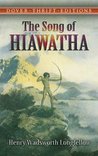
Review: The Song of Hiawatha

The Song of Hiawatha The Song of Hiawatha by Henry Wadsworth Longfellow
My rating: 5 of 5 stars

This book, spanning almost 200 pages, is one large poem. It is divided into chapters and memorializes myths from Native American tribes in mid-western North America. It is entertaining and, like much of Longfellow's poetry, highlights the unique nature of the United States. It portrays America as a land overflowing with natural resources and with a history that is also deep and speckled by strange names like Hiawatha.

No wonder Longfellow received commendation in Westminster Abbey despite not being British. His poetry is patterned with a meter that is obvious to any reader. It does not rhyme but in a chant, lulls the reader into a trance as she/he wonders what is coming next in Hiawatha's adventures.

Themes span the gamut of one's lifespan; birth, adventure, marriage, family, civic service, and death are all covered. In an age where Native Americans could be viewed as racially tinted, Longfellow's approach humanizes the bloodline. One sees Native Americans as a nexus of relationships that, too, long for peace and prosperity.

Unfortunately, history did not always listen to Longfellow. Native American culture is still not much appreciated today and is constrained to reservations. Reading this poem almost 150 years since its first publication, one cannot help but ponder whether Longfellow's idyllic vision meets the reality of modernity. At the very least, however, it gives us something to aspire to.

View all my reviews

Tuesday, April 23, 2019

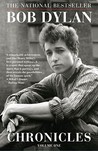
Review: Chronicles, Volume One

Chronicles, Volume One Chronicles, Volume One by Bob Dylan
My rating: 0 of 5 stars

Bob Dylan is perhaps the best popular American songwriter/poet in the past century. Dylan, as he admits in this memoir/autobiography, was not the best student in high school, but he taught himself how to write by imitating the lyrical and musical work of the best folk artists of the day.

Although Dylan is known for his social conscience, in this work, he eschews that he ever aspired to dabble in contemporary politics. He claims - over and over - that he only wanted to be a true folk artist. Although he was popularly known for running away from the public spotlight, he claims that the press forced him to live this life. In so doing, he claims his persona is false - or at the very least, misguided.

Dylan would not be the first artist to claim that popularity hurt his/her life. I'm sure there is a solid nugget of truth in that claim. Nonetheless, Dylan appears to have nurtured this persona in his public portrayal of himself in pursuit of his artistic vision.

Either way, Dylan's passion for songwriting comes through in this work. Most of this book dwells upon how Dylan's unique and brilliant style came about through the deep study of others' poetry and lyrics. Songwriters and poets will find it well worth the time to read, muse, and develop their own styles from Dylan's brilliance.

View all my reviews

Saturday, April 20, 2019

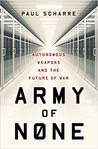
Review: Army of None: Autonomous Weapons and the Future of War

Army of None: Autonomous Weapons and the Future of War Army of None: Autonomous Weapons and the Future of War by Paul Scharre
My rating: 4 of 5 stars

This book, written by a non-technologist with extensive military experience, describes the intersection of artificial intelligence with United States military affairs. It uses terms like “autonomy” and “semi-autonomy” extensively. Autonomous weapons are weapons that can identify their own targets. Semi-autonomous weapons can track pre-identified targets (that is, targets previously identified by humans). Semi-autonomous weapons are currently in use; no autonomous weapons are known to be in use.

The line between these two is currently blurring. This is not due to Department of Defense (DARPA) research, but due to research in artificial intelligence (AI) in the commercial sphere. Computers are becoming “intelligent.” This book explores what that means and whether computers can be considered as “alive.” It does not take this excursion as an academic exercise but rather as an exploration into the future of warfare.

As a technologist, I found myself desiring more optimism in the author. My attitude towards AI is very positive and very inevitable. This author keeps admonishing the reader that humans must remain “in the loop” in military applications so that they can make the ultimate decision whether to go for a kill or not. Again, as a technologist, I see human involvement as more-or-less inevitable. We humans will find a way to make increasingly better use of artificial intelligence because that’s what we’ve done with other technologies throughout thousands of years of human history.

We must – must – continue to work. I’m not scared of what’s ahead. It’s an opportunity for people like me to continue to work and to impact the future. I’m much more scared of our prospects for the future if countries like the United States stop research on military applications and countries like Russia continue. The field of AI will continue to progress because of its promise in other applications. The only real question is to what extent the military will be “in the loop.” I’d rather us focus our energies rather than following a policy of appeasement towards those with a harsher track-record of human rights.

Overall, this book achieves its purpose and communicates its message clearly. Those interested in military affairs or technology should pay attention.


View all my reviews

Review: How To Write a Simple Book Review: It's easier than you think

How To Write a Simple Book Review: It's easier than you think by Allyson R. Abbott My rating: 3 of 5 stars ...